
 English
 Arabic
Lightweight Aggregate
Your Foundation for Thermal Screed, Insulation Plaster & Lightweight Concrete
LIGHTHERM is an EPS (Expanded Polystyrene) based lightweight aggregate — the core material behind Singapore’s most
trusted thermal screed, insulation plaster, lightweight concrete, and thermal render solutions.
Unlike standard EPS beads, LIGHTHERM is coated with our patented VODA-Additives technology, ensuring it bonds
seamlessly with cement slurry without floating or segregating. The result is a stable, consistent lightweight
concrete mix that performs predictably on every project — from floor screed to structural-grade concrete.
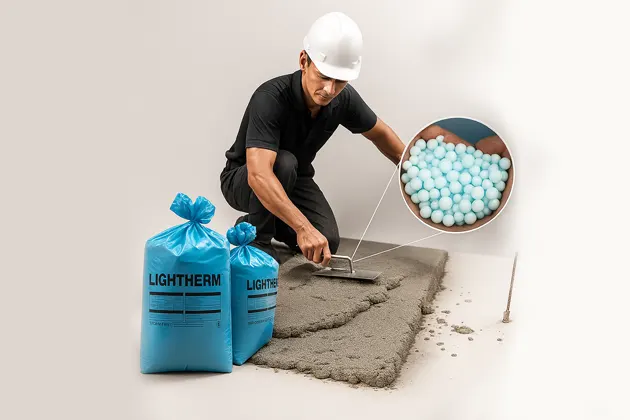
LIGHTWEIGHT - Aggregate
Each EPS bead is coated with our proprietary VODA-Additives formulation — a three-part system of Polymer Adhesion Agent, Static Modification Agent, and Surface Tension Modification Agent — delivering outstanding thermal performance, fire resistance, and long-term durability.
With our patented VODA-Additives coating, it ensures that LIGHTWEIGHT-Aggregate blends well with cement slurry without segregation, assist in the making of a high quality LWC (Lightweight Concrete) on site, a high stability LWC as low as 250kg/m3. We named our mixed LWC as LIGHTHERM-Concrete
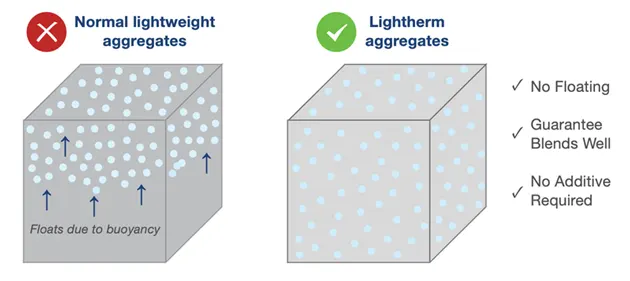
LIGHTWEIGHT -Aggregate in action
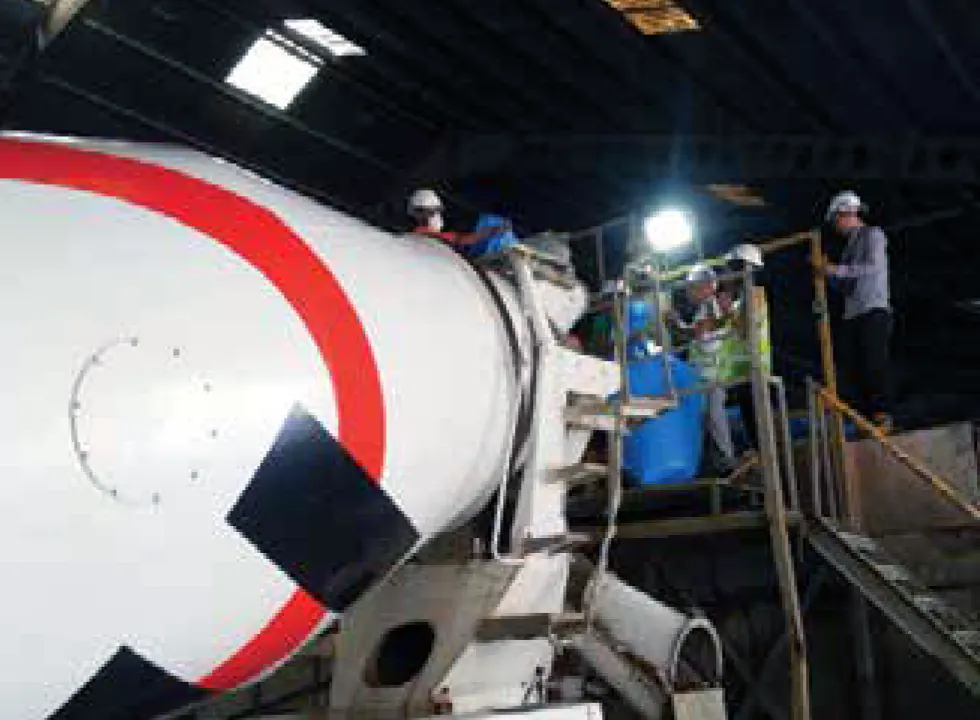
Product demonstration video show casing a homogenous blending during mixing, during the making of a light weight concrete (LWC)
MANUFACTURING PROCESS
OF LIGHTHERM-Aggregate & LIGHTHERM-Concrete
01
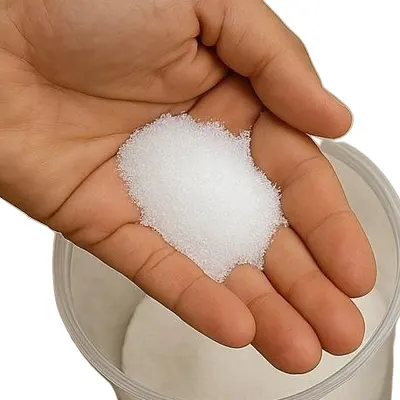
PS resin
Is a synthetic plastic polymer made from styrene monomers.
02
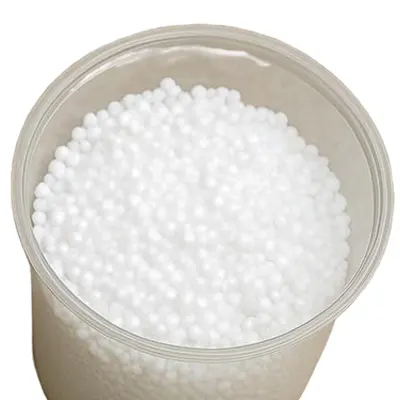
EPS (Expanded Polystyrene)
Made by expanding tiny PS beads using steam + a blowing agent (like pentane).
03
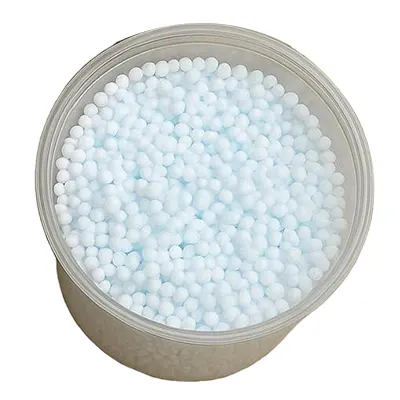
LIGHTHERM-Aggregate
Is a lightweight aggregate made by processing EPS with VODAPRUF’s patented chemical VODA Additives
04
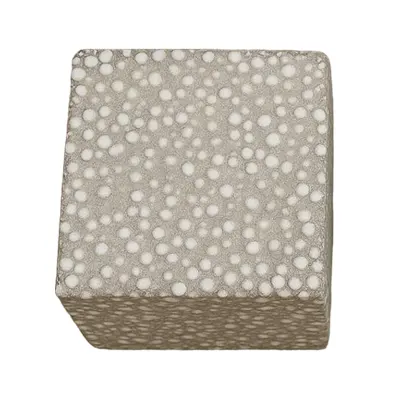
LIGHTHERM-Concrete
Is a lightweight concrete that comprises of LIGHTHERM-Aggregate and cementitious material (and sand) as a binder
“From raw PS resin to pourable lightweight concrete — LIGHTHERM’s 4-step manufacturing process ensures every bag delivers the same consistent, high-performance result on your construction site.”
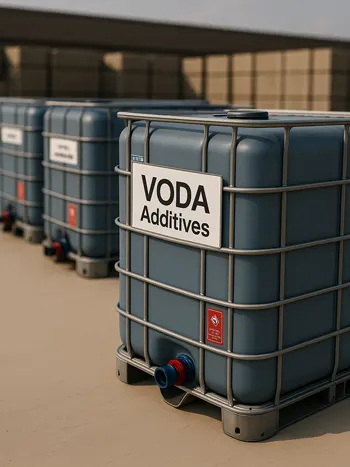
VODA-Additives
VODAPRUF in-house invention and innovation
Untreated EPS beads are lightweight but difficult to use in construction — they float in cement, clump due to static charge, and repel water, making them almost impossible to mix uniformly. Vodapruf’s patented VODA-Additives solve all three problems in one coating.
With our patented VODA-Addtives coating, it ensures that LIGHTHERM-Aggregate blends well with cement slurry without segregation using blend of :
- Polymer Adhesion Technology
- Static Modification Technology
- Surface Tension Modification Know-How
REACTION TO FIRE CLASSIFICATION: A1
Classified under EN 13501-1: 2007 +A1:2009
Safety is non-negotiable on Singapore and Malaysian construction sites.
LIGHTHERM-Concrete is tested under:
- BS EN ISO 1182:2010 “Reaction to Fire Test for Products: Non-Combustibility Test”
- BS EN ISO 1716:2010 “Reaction to Fire Test for Products : Determination of the gross heat of combustion”
- BS EN 45545-2:2013 +A1:2015 Annex C , Method 1 (smoke chamber)
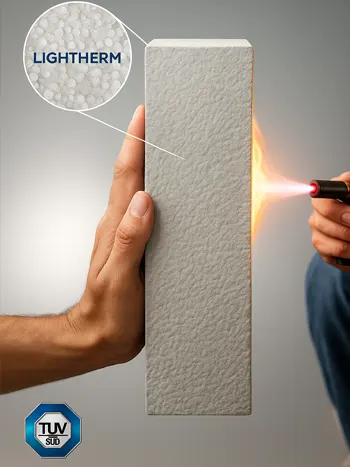
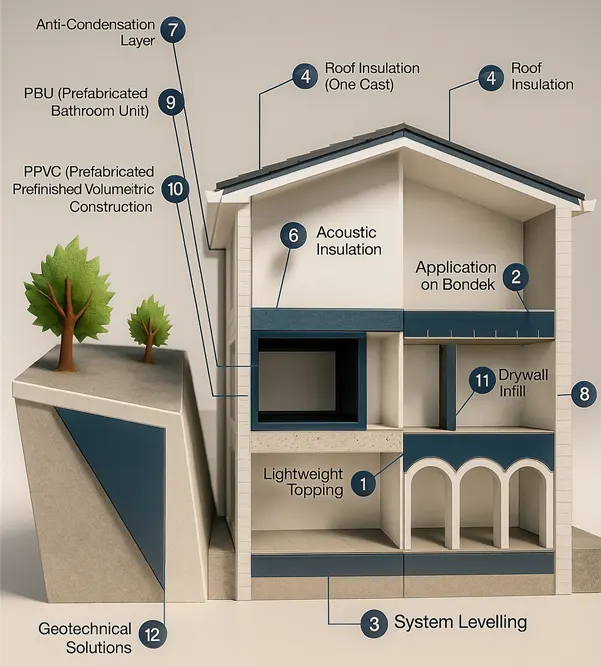
FULL RANGE OF APPLICATION
LIGHTHERM-Concrete is suitable for all areas of application with two objective:
- Lightweight
- Thermal insulation
LIGHTHERM serves three broad application zones, each with different density and
thermal performance targets:
-
Zone A — Thermal Plaster & Insulation Render:
Low-density mixes (140–350 kg/m³) applied as wall plaster or external insulation
render to reduce heat transfer through building envelopes. -
Zone B — Lightweight Screed & Topping:
Medium-density mixes (400–800 kg/m³) used as floor screeds, roof toppings, and
acoustic underlays. -
Zone C — Lightweight Concrete & Structural Mortar:
Higher-density mixes (900–2000 kg/m³) engineered for load-bearing applications,
precast elements, and structural gap-filling.
LIGHTHERM Thermal Plaster is a premixed lightweight plaster system using low-density LIGHTHERM aggregate (140–350 kg/m³) as the primary insulating filler. It is applied directly to walls and building envelopes as an insulation render or finishing plaster, eliminating the need for a separate insulation board layer.
- Thermal performance: k-value 0.041–0.12 W/m·K depending on density — significantly lower than standard sand-cement plaster.
- Anti-condensation: Prevents moisture condensation on interior walls in air-conditioned environments.
- Single-coat system: Can replace render + insulation board in one application, reducing labour and material cost.
Global Project References
Some large scale projects highlight
SINGAPORE: 700+ Project References
VODAPRUF has a track record to supply to more than 700+ projects in Singapore
APPLE Data Centre
12,000m2
Singapore General Hospital
54,000m2
Statecourt
20,000m2
United Kingdom
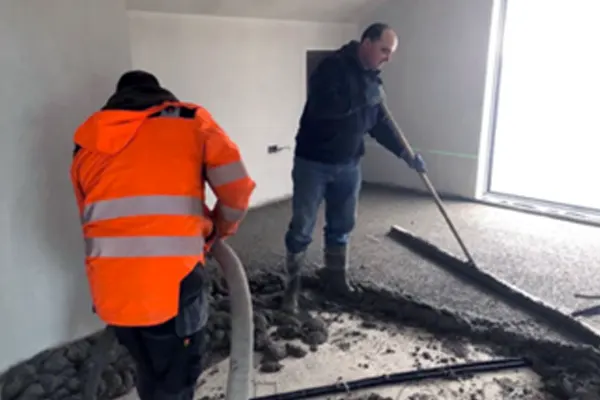
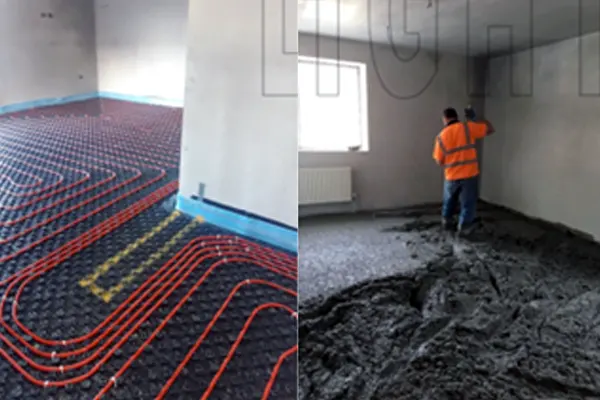
Thermal Insulation for Wall & Floor
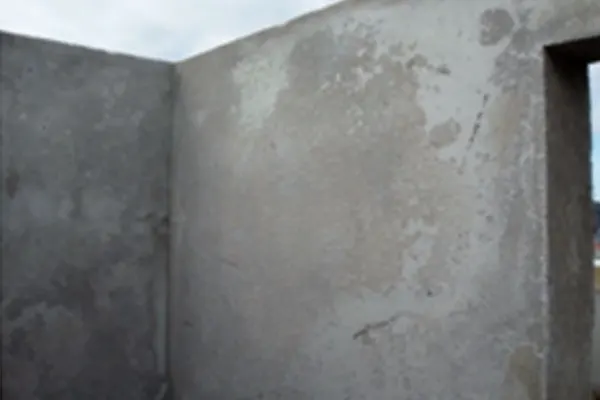
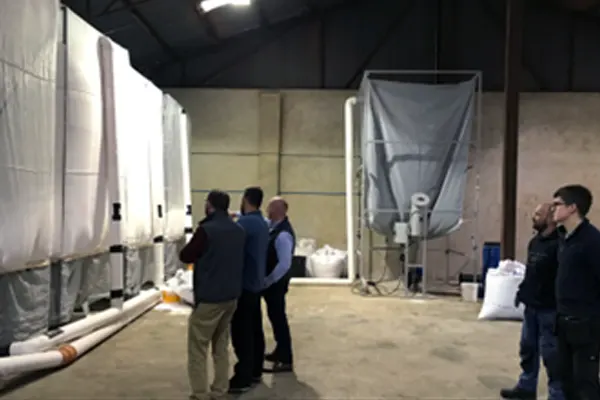
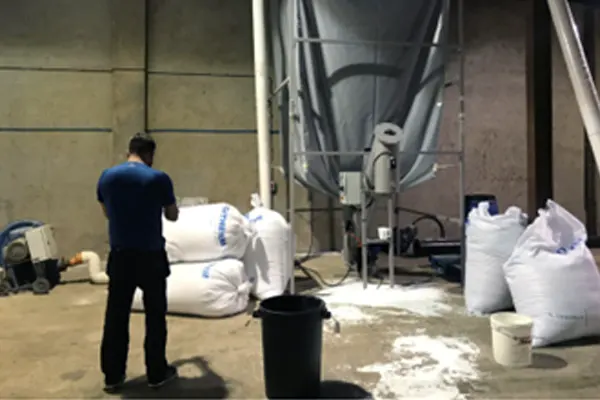
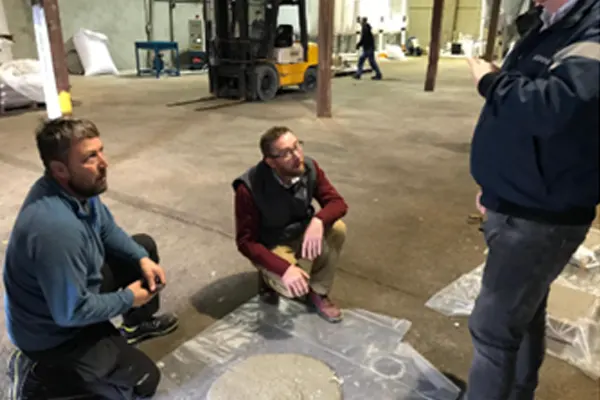
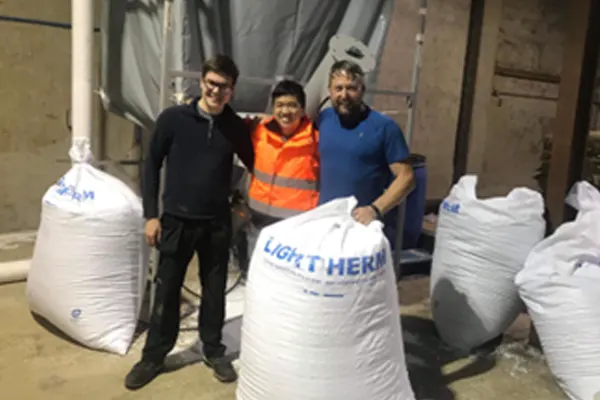
United Kingdom
Equipped with Local Production of LIGHTHERM
Eliminating the need of sea freight cost
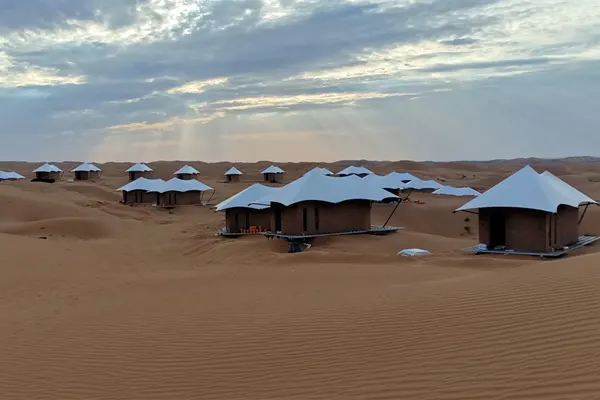
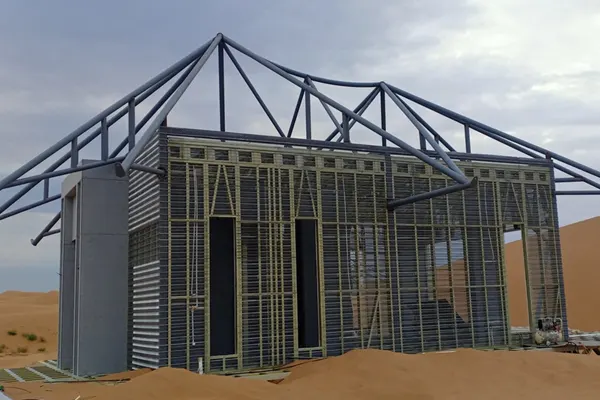
Middle East
Thermal Insulation for Light Gauge Steel system
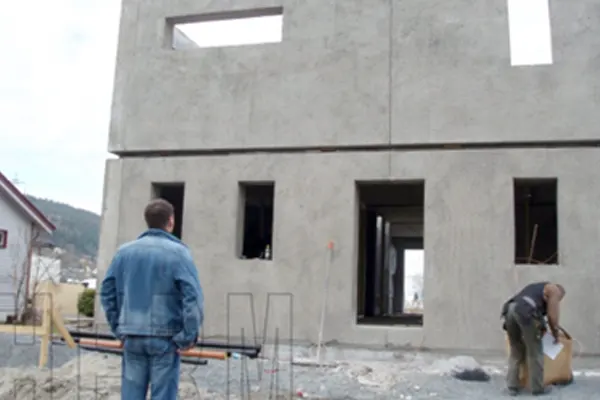
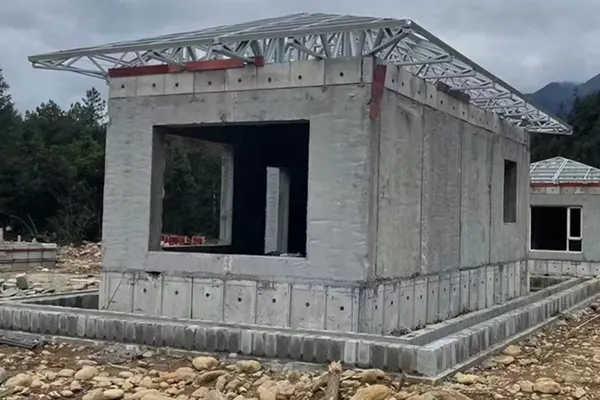
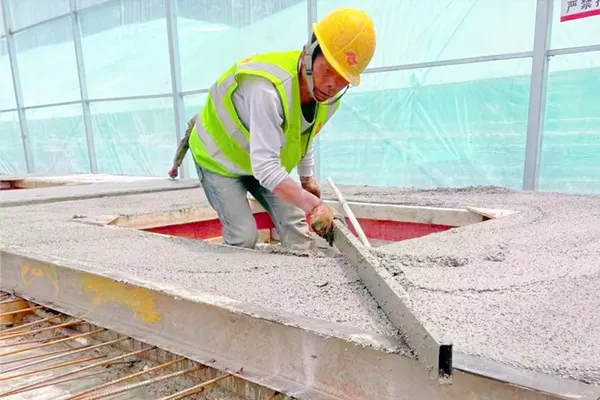
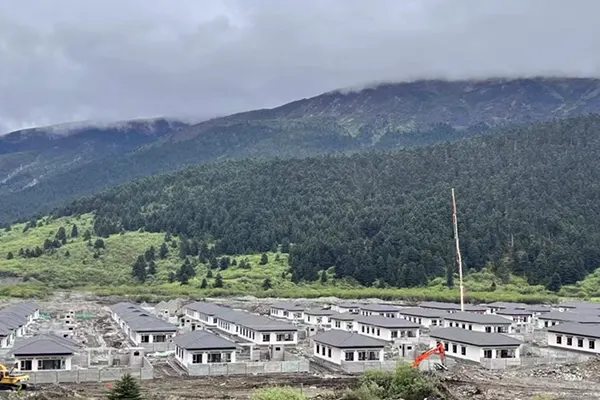
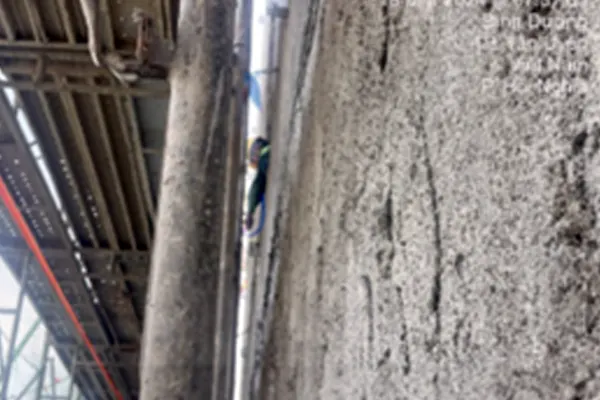
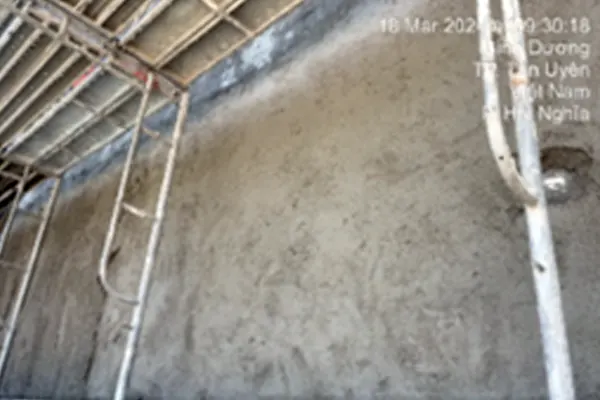
Vietnam
Precast House Wall with outstanding insulation
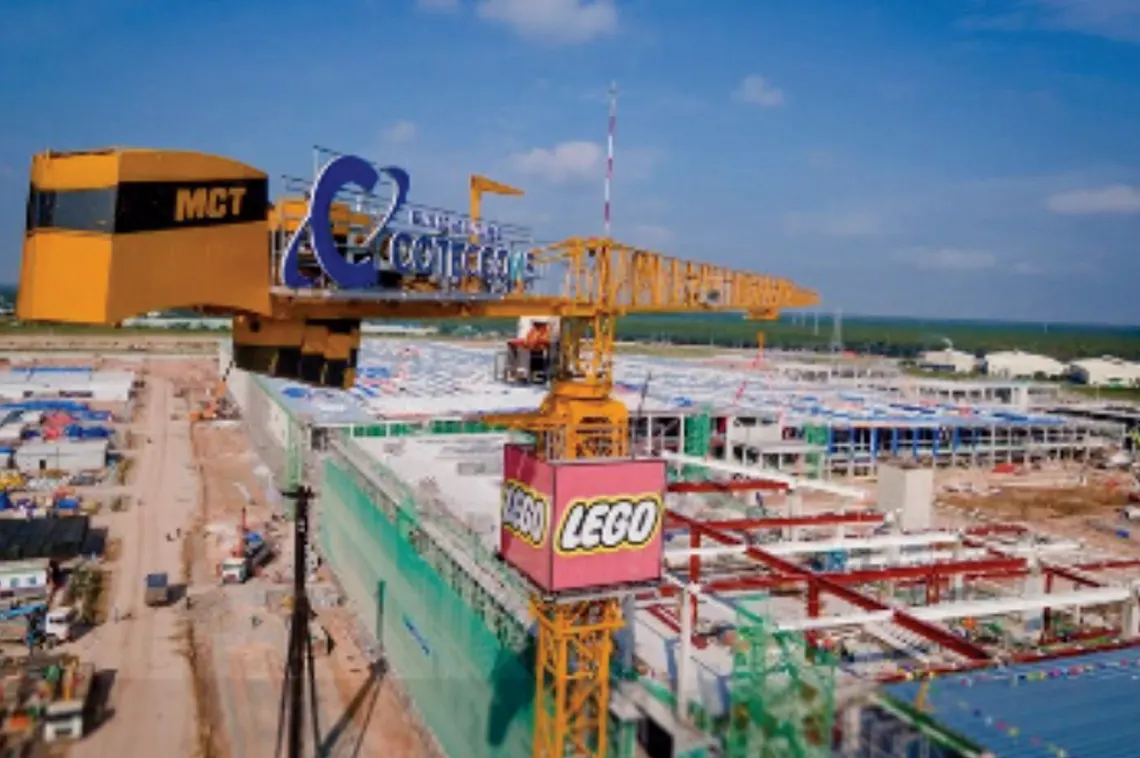
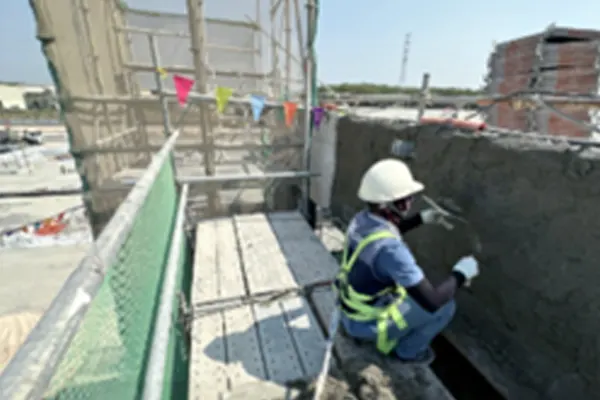
Vietnam
LEGO Factory
FULL RANGE & WIDE VARIATION OF
STRENGTH & DENSITY
LIGHTHERM-Aggregate can be made into LIGHTHERM-Concrete of a wide range of density and strength. Below is some standard mix design for reference.
LIGHTHERM Aggregate Mix Design
LIGHTHERM can be supplied and mixed at a wide range of densities (140–2000 kg/m³) to meet different structural and thermal requirements. Use the mix design table below as a starting guide — our technical team can assist with project-specific design mixes.
| Property | 110 | 250 | 300 | 500 | 700 | 1000 | 1200 | 1400 | 1600 | 1800 | 2000 |
|---|---|---|---|---|---|---|---|---|---|---|---|
| Wet Density, kg/m³ | 195 | 388 | 465 | 603 | 818 | 1123 | 1338 | 1553 | 1768 | 1983 | 2198 |
| After 60 days Dry Density, kg/m³ | 140 | 313 | 375 | 530 | 730 | 1002 | 1202 | 1402 | 1602 | 1802 | 2002 |
| Cement, kg | 110 | 250 | 300 | 250 | 250 | 350 | 350 | 350 | 350 | 350 | 350 |
| Sand, kg | 0 | 0 | 0 | 200 | 400 | 540 | 740 | 940 | 1140 | 1340 | 1540 |
| Water lower range, litre | 85 | 138 | 165 | 153 | 168 | 233 | 248 | 263 | 278 | 293 | 308 |
| Water highest range, litre | 95 | 155 | 186 | 170 | 185 | 258 | 273 | 288 | 303 | 318 | 333 |
| LIGHTHERM, litre | 1000 | 1000 | 927 | 872 | 764 | 581 | 473 | 365 | 257 | 149 | 41 |
| Strength, MPa | NA | 0.85 | 0.95 | 0.95–1.3 | 1.3–1.8 | 2.5–3.5 | 3.5–6.5 | 5.5–8 | 8–15 | ||
| Thermal Conductivity, W/m·k | 0.041 | 0.067 | NA | 0.082 | 0.145 | 0.195 | 0.305 | 0.385 | 0.405 | NA | NA |
| Weight Reduction | 95% | 90% | 88% | 79% | 71% | 58% | 50% | 42% | 33% | 25% | 17% |
** STRICTLY measure the EPS by volume (litre), DO NOT measure by weight (kg) !!!
*** Always start the water dosage with the lower range, then increase slowly within the highest water range. Adjust within the water range to achieve a required flow/liquidity/slump value.
APPLICATIONS AND SUGGESTED DENSITY
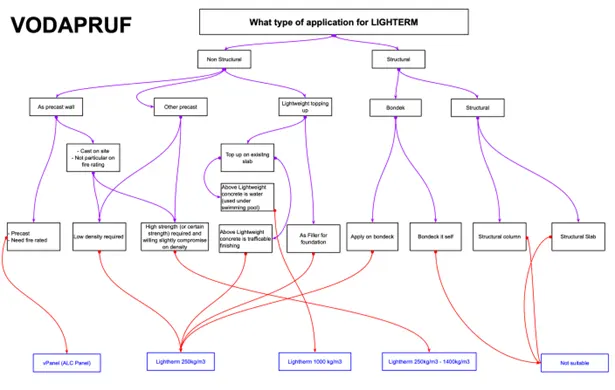
Below chart show case a general suggestion on types of application and VODAPRUF’s proposed density range of LIGHTHERM Concrete
LIGHTWEIGHT TOPPING
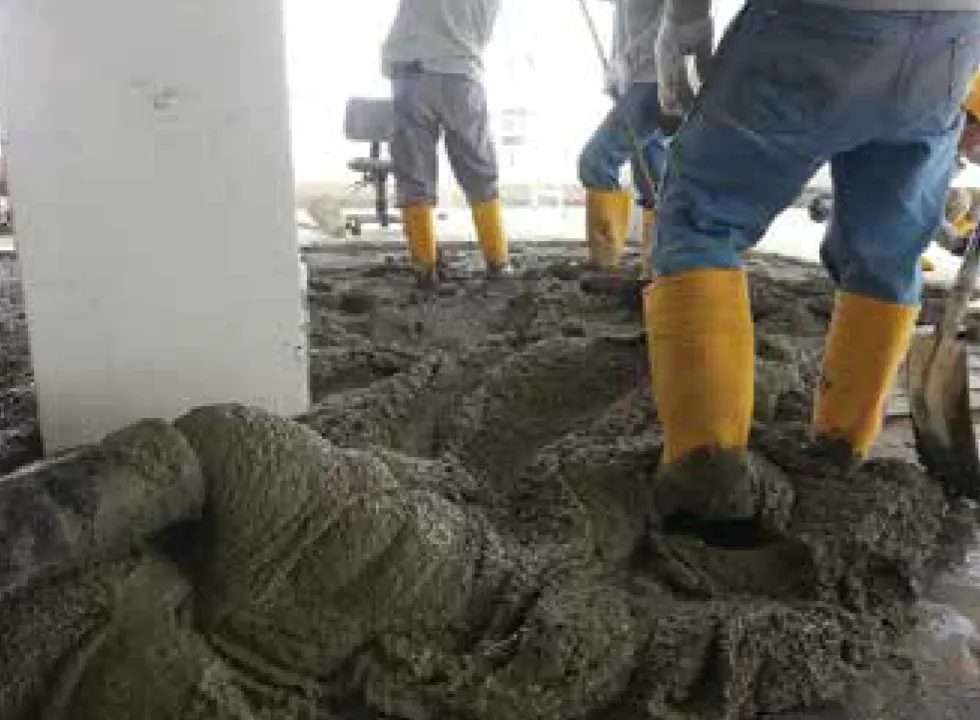
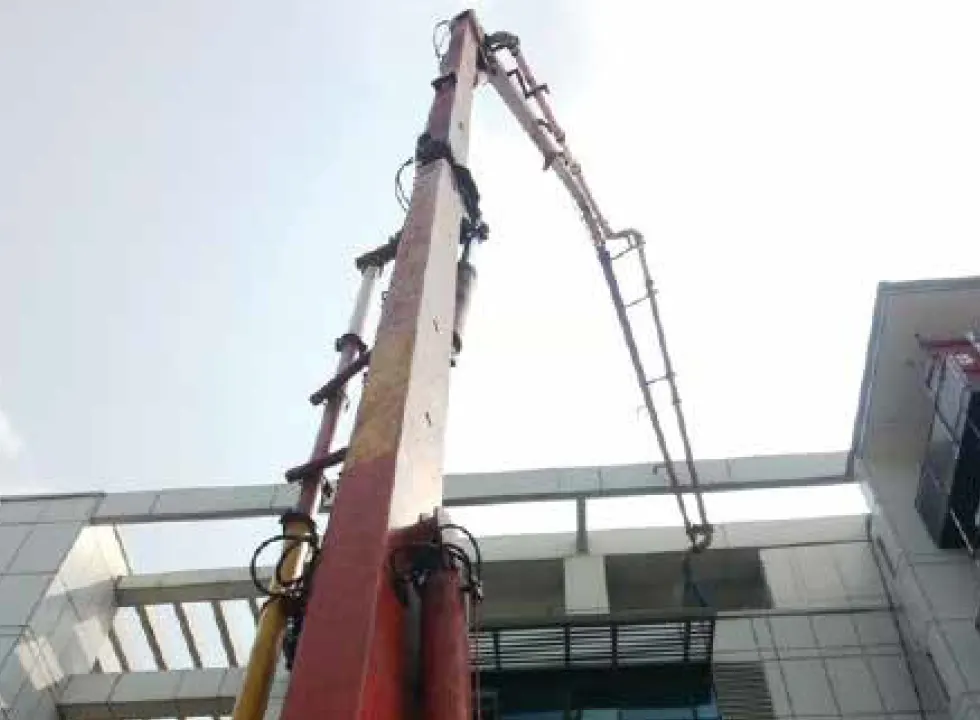
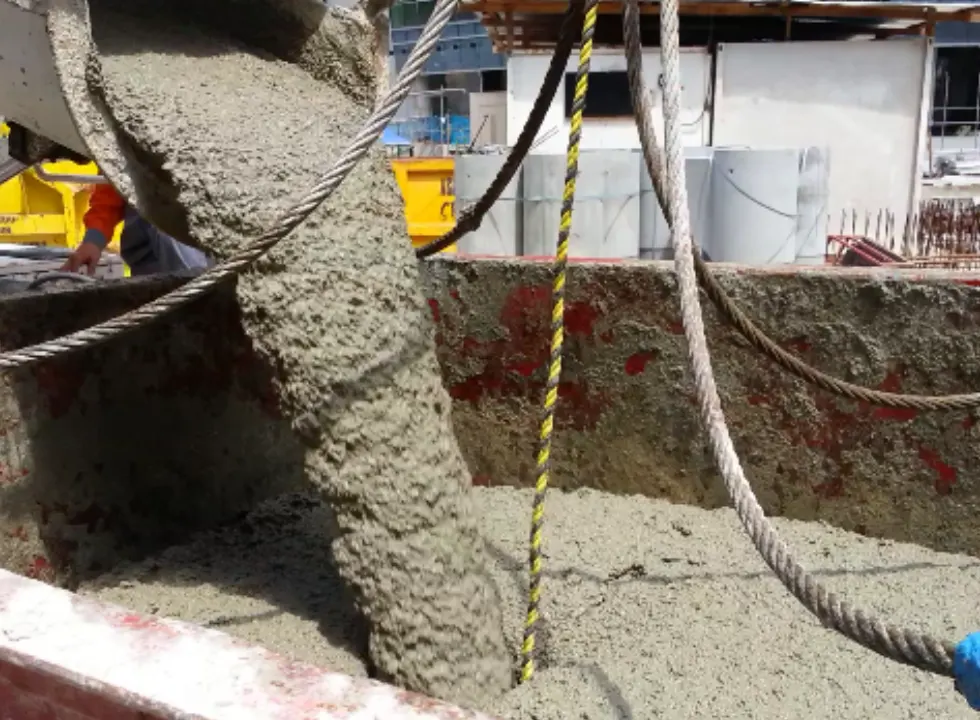
Lightherm Screed 250kg/m3
Lightherm Screed is used as a lightweight topping screed to adjust floor level. In some projects there might be concerns with the usage of conventional cement sand screed, due to its high density of 2100kg/m3. Lightherm Screed is an ideal alternative.
Student Service Centre @ Nanyang Technology University (NTU)
ROOF INSULATION
Lightherm Screed 250kg/m3
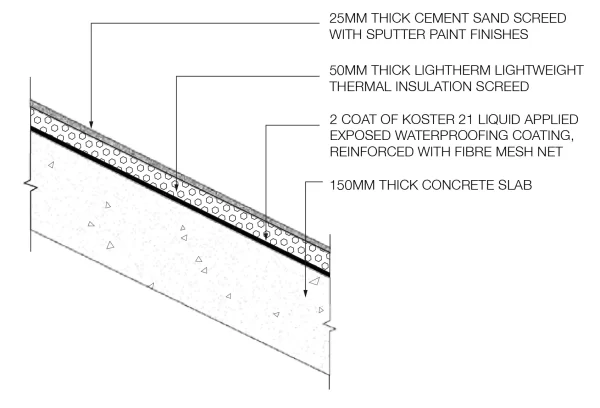
A 50mm thick Lightherm Screed applied to the roof (inverted roof system) achieved BCA stipulated u-value requirement.*
For Singapore BCA Green Mark and Malaysian GreenRE-compliant roof insulation, LIGHTHERM screed achieves U-values below 0.4 W/m²K using a single lightweight aggregate layer — without additional foam boards or membranes.*
| Layer | Thickness, b (m) | Conductivity, k (W/mK) | Resistance, R (m²K/W) |
|---|---|---|---|
| Outside Surface, (Ro) | – | – | 0.0550 |
| 25mm thick cement sand screed | 0.025 | 0.5330 | 0.0469 |
| 50mm thick Lightherm Screed | 0.050 | 0.0670 | 0.7463 |
| 1.2mm thick KOSTER 21 waterproofing membrane | 0.001 | 0.0826 | 0.0145 |
| 150mm thick concrete slab | 0.150 | 1.4420 | 0.1040 |
| Inside Surface, (Ri) | – | – | 0.1620 |
| Total Resistance (RT) | 1.1287 |
Thermal Transmittance (U-value) of Roof, 1/RT : 0.89 m2K/W
Maximum Allowable U-value of Roof : 1.20 m2K/W
0.89 < 1.20, Pass!
*Contact us for more information.
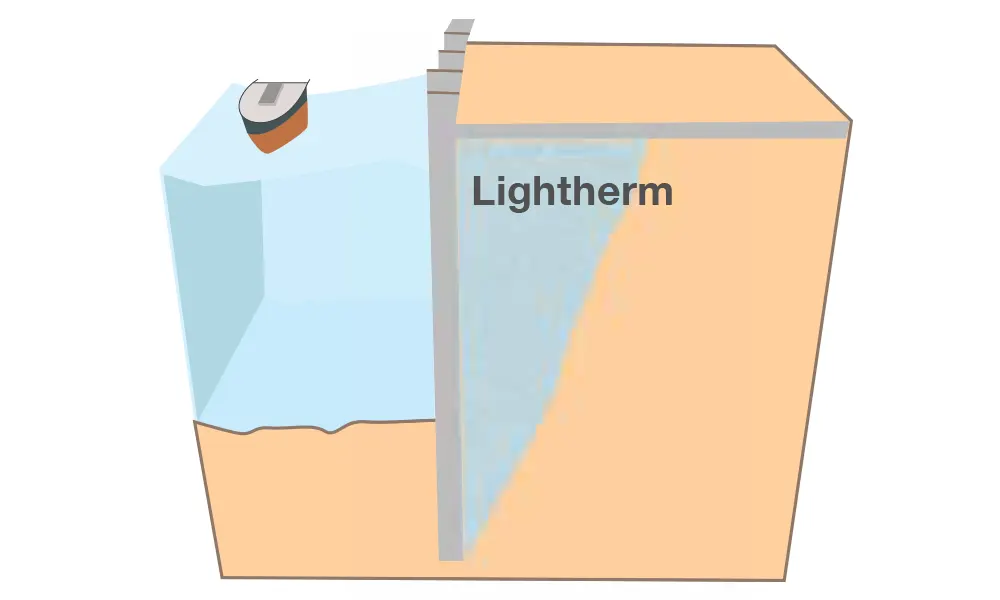
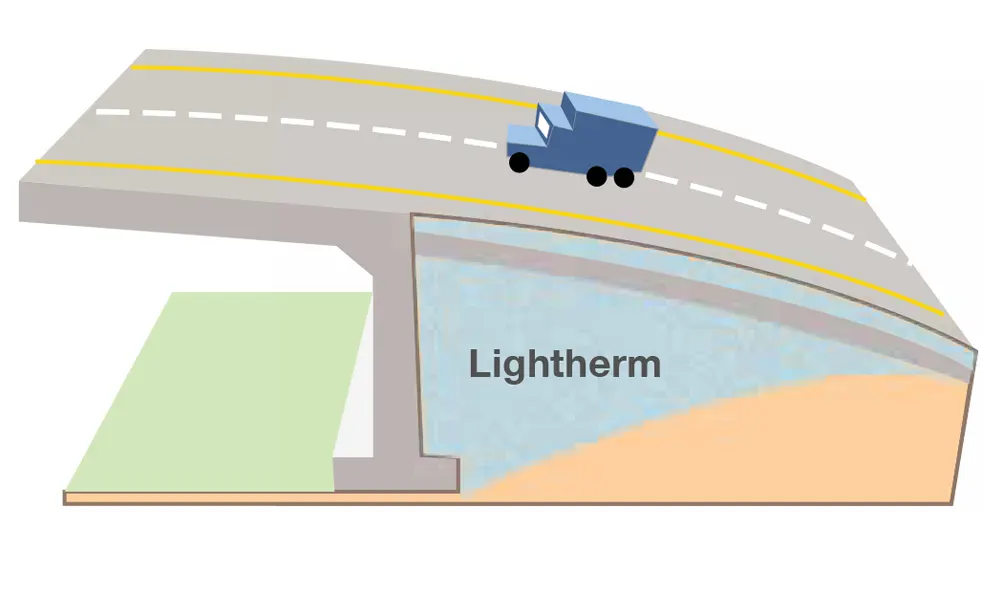
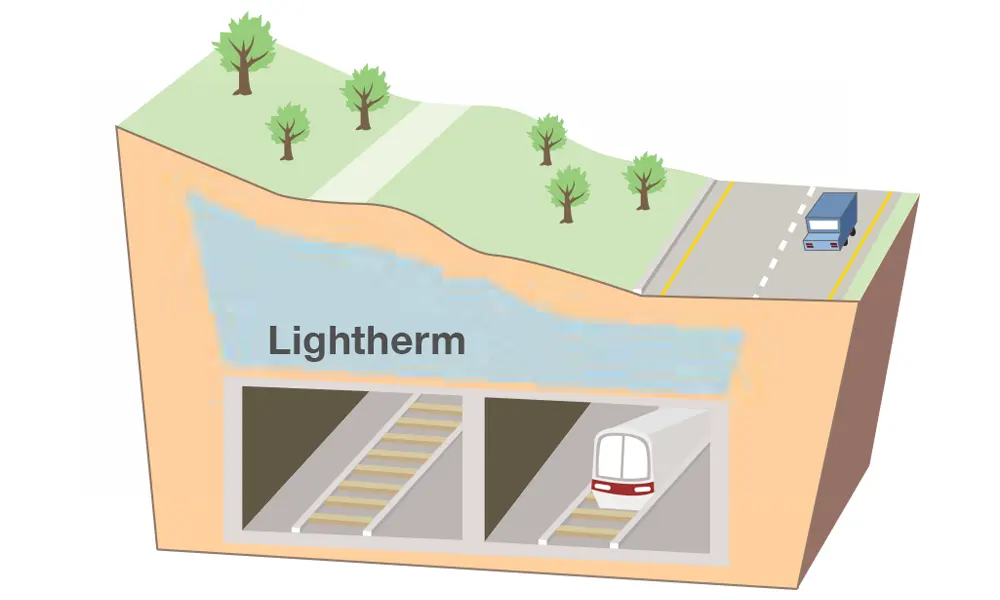
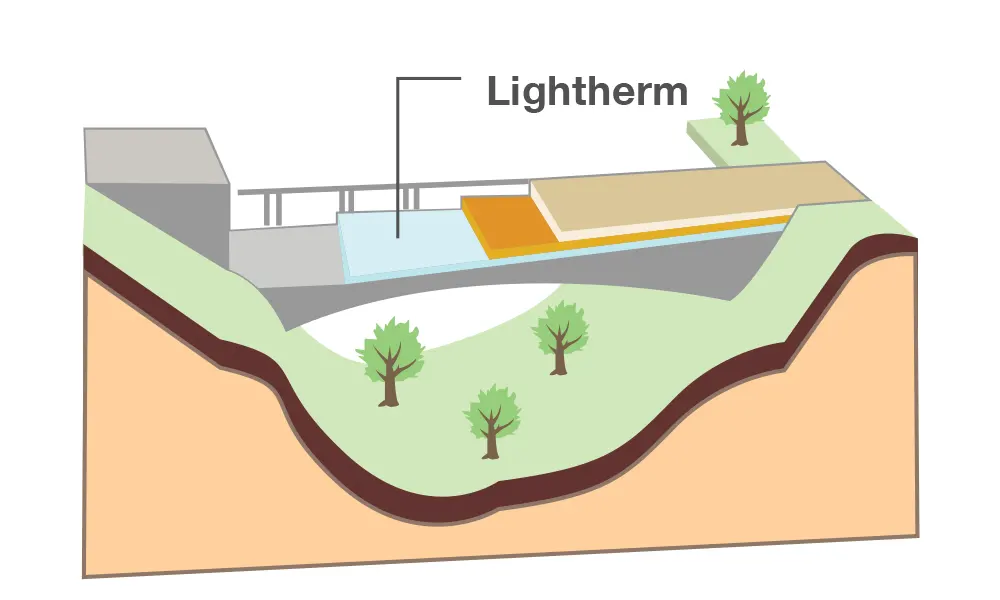
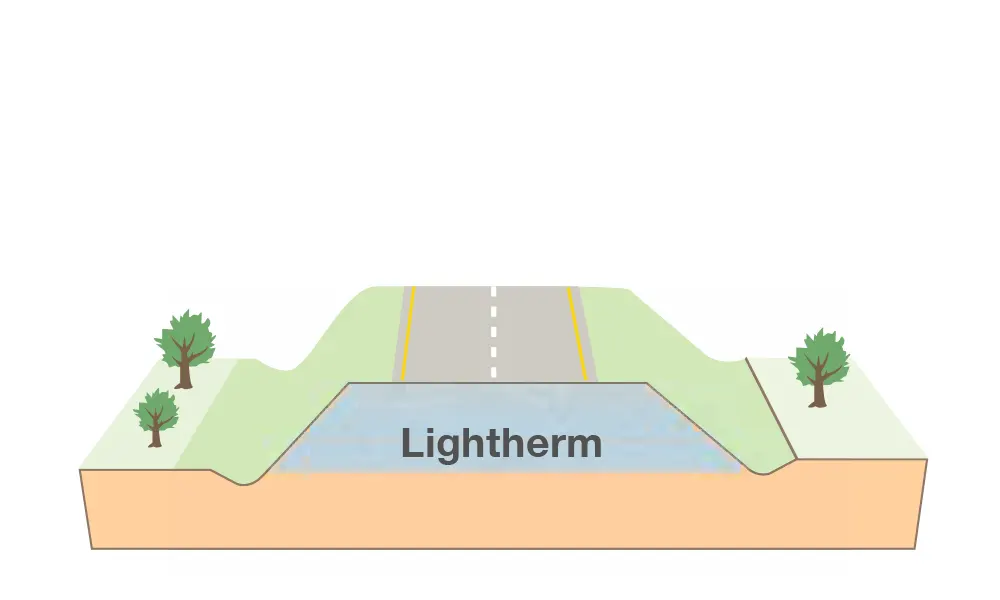
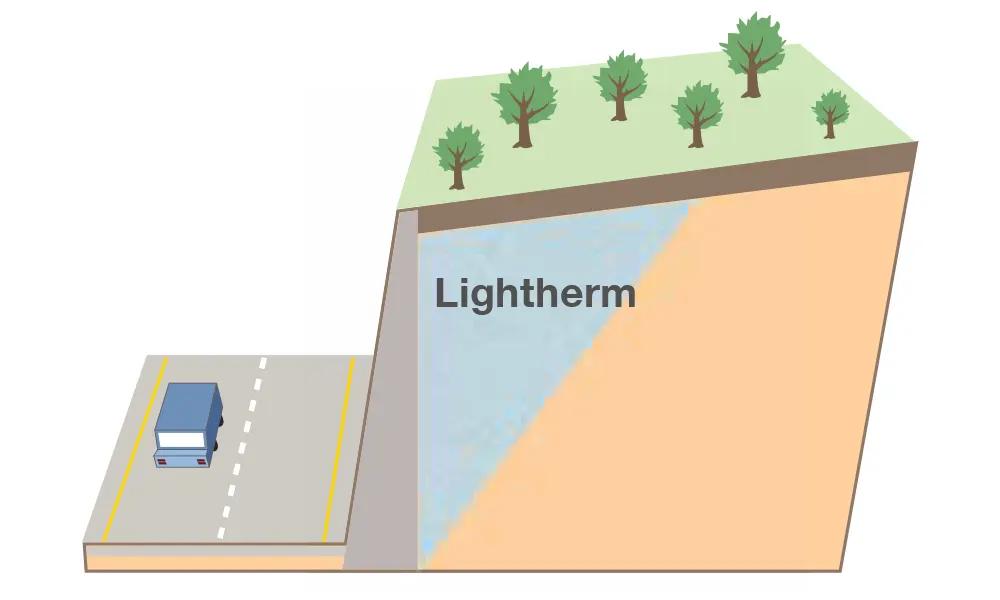
GEOTECHNICAL SOLUTIONS
Lightherm Screed 250kg/m 3
LIGHTHERM lightweight aggregate is used in geotechnical applications where reducing overburden load is critical.
Common uses include:
- Embankment fill over soft ground or poor-bearing soils
- Retaining wall backfill to reduce lateral earth pressure
- Void filling in tunnels and underground structures
- Bridge approach fill to minimise settlement differential
For project-specific mix design and load calculations, contact our technical team.
ANTI-CONDENSATION LAYER
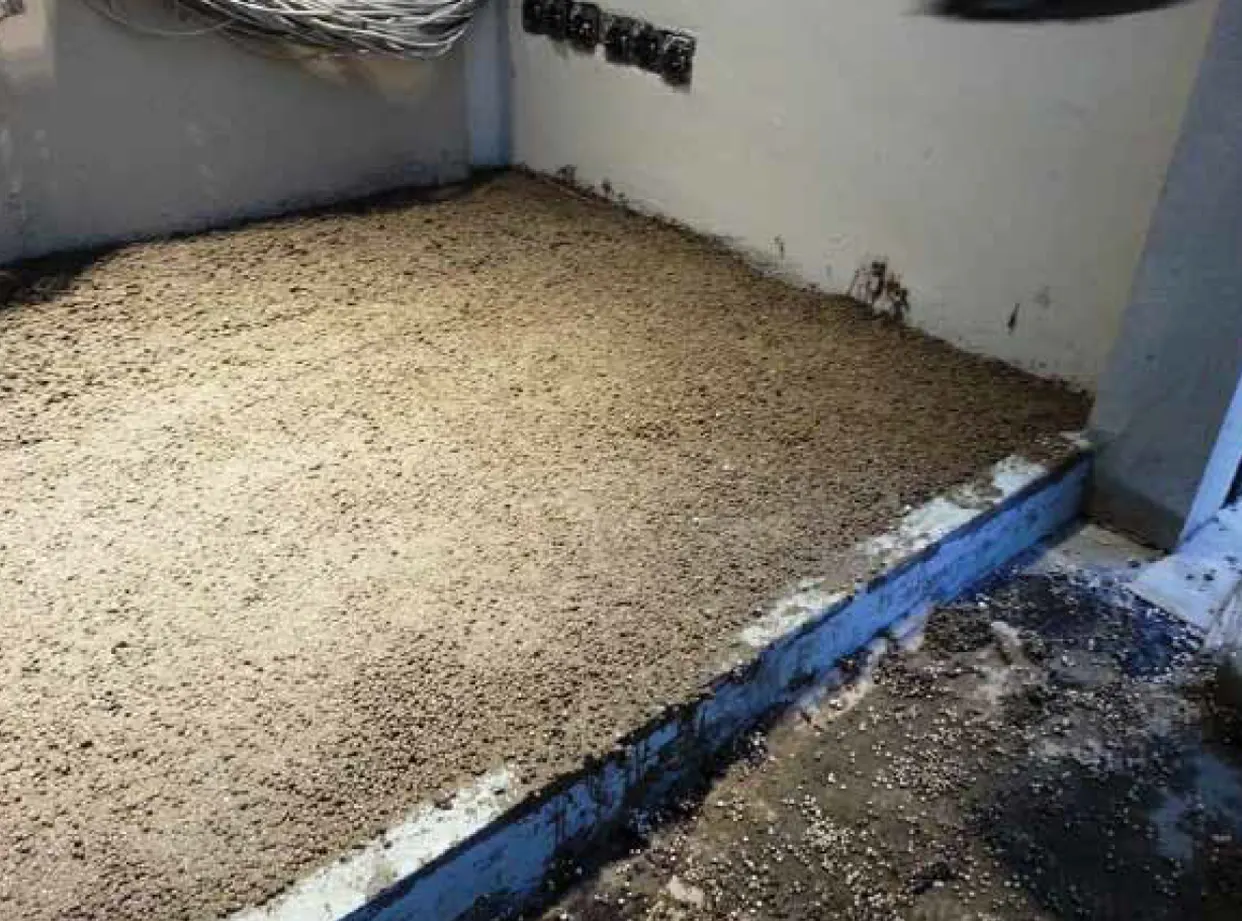
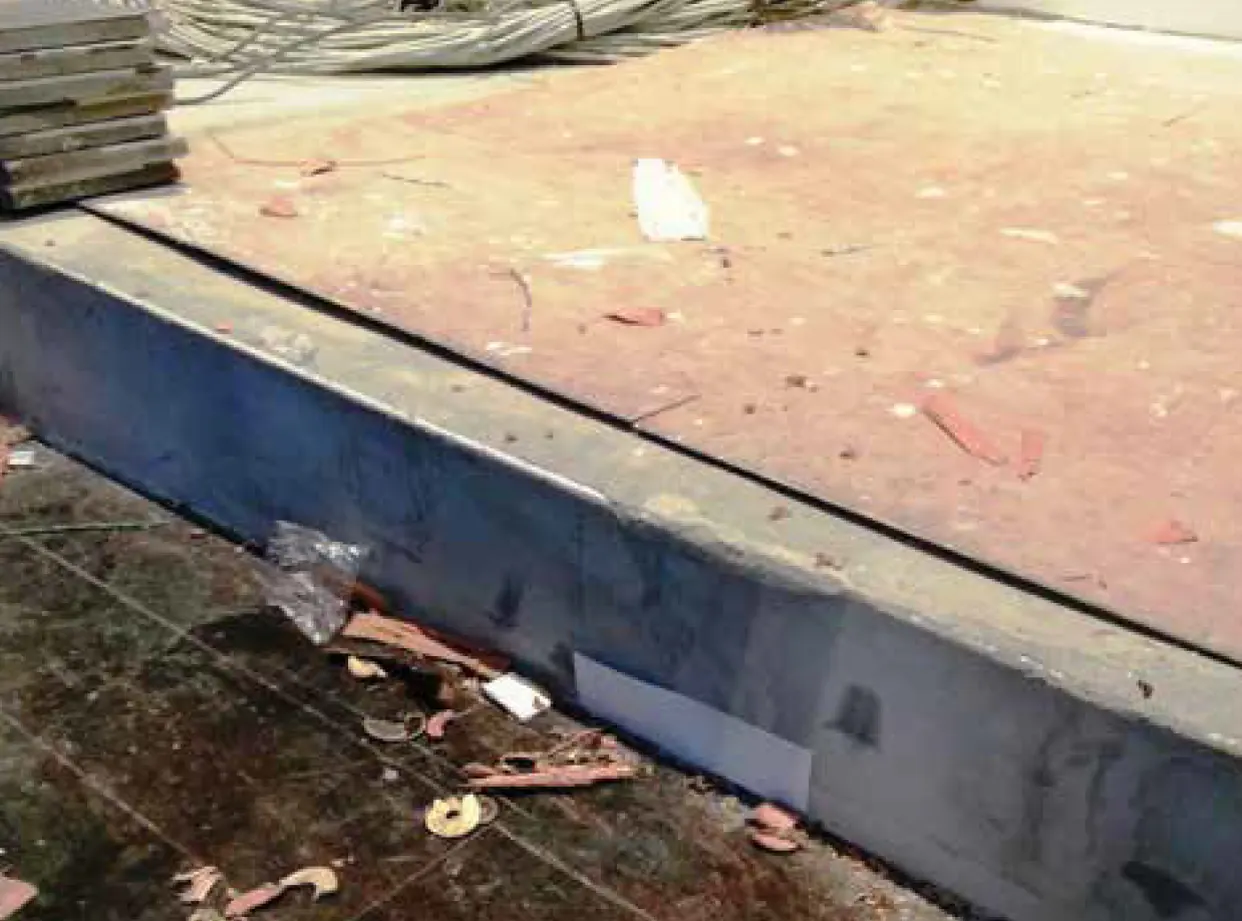
Lightherm Screed can be used as an insulation layer to prevent condensation problem on the external side of building.
Lightherm Screed is used as a lightweight topping screed to adjust floor level. In some projects there might be concerns with the usage of conventional cement sand screed, due to its high density of 2100kg/m3. Lightherm Screed is an ideal alternative.
Lightherm anti-condensation plaster uses the same Lightherm Thermal Plaster system, specified at low density (140–250 kg/m³) to maximise the insulating air-pocket effect and prevent dew-point condensation on interior surfaces.”
Conservation unit @ 138 Neil Road, Singapore
PRECAST ELEMENT
Lightherm Screed 250kg/m3 - 1900kg/m3 *
*Various density available, contact us for more information.
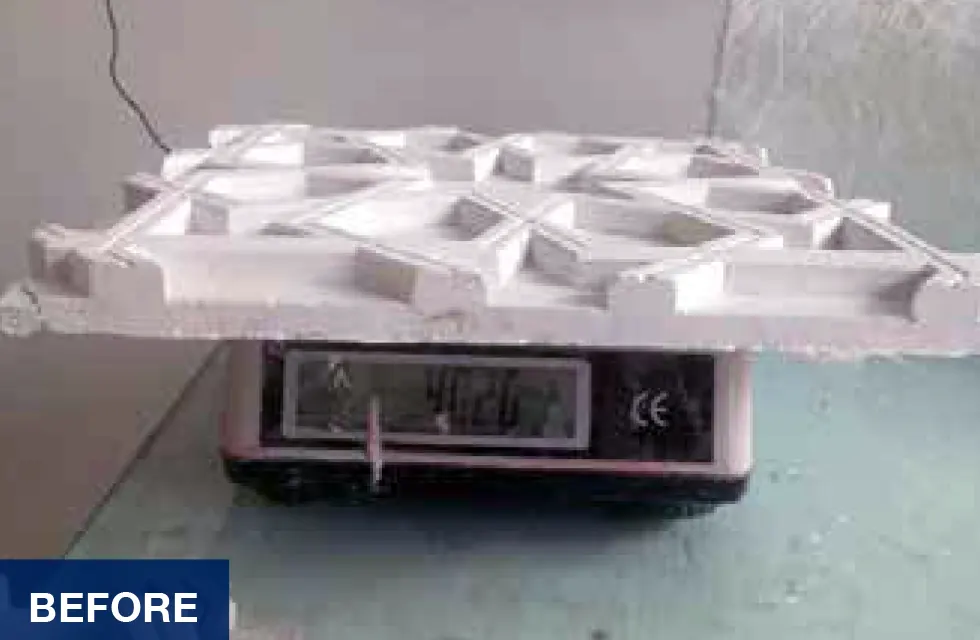
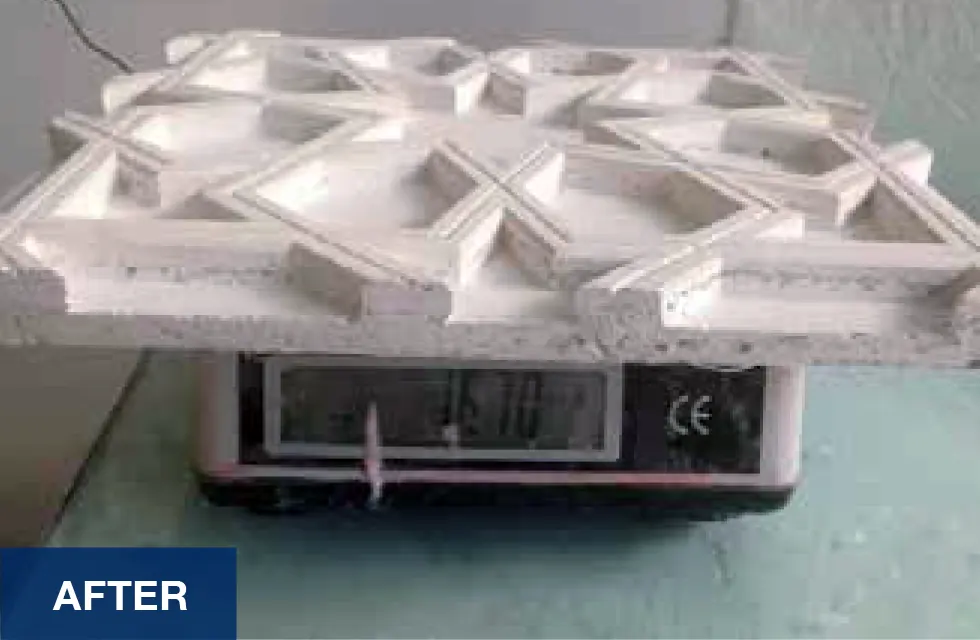
Lightherm is incorporated into precast elements to reduce the weight of the final product.
DSTA Project @ 1 Depot Road, Singapore
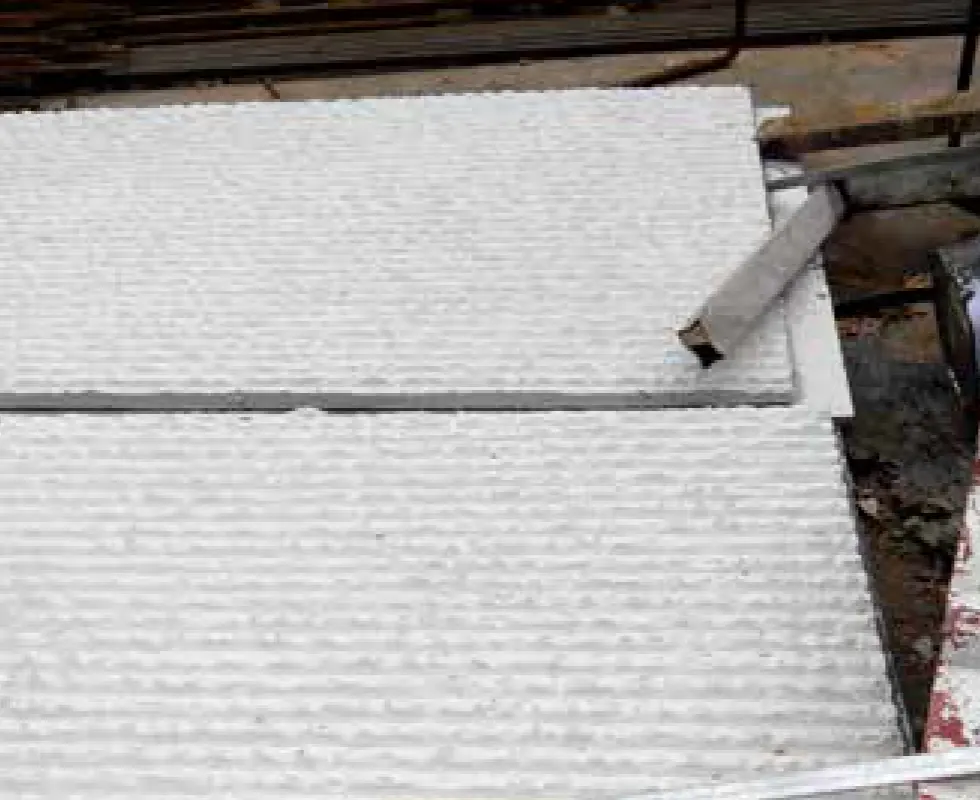
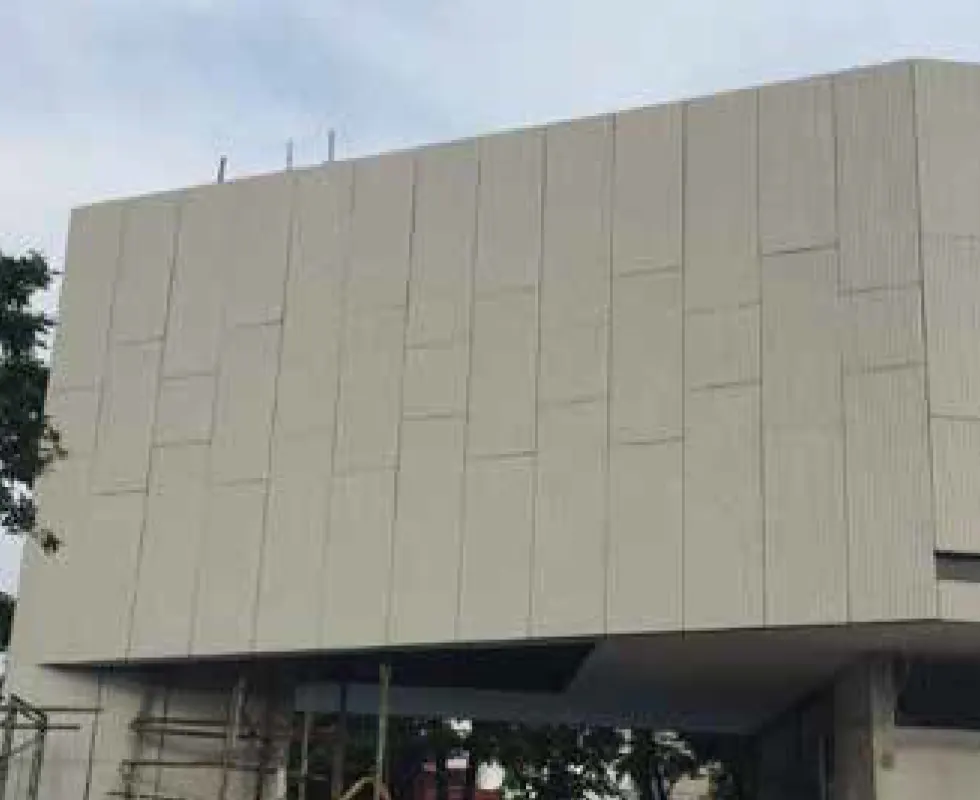
Architectural Panel made with Lightherm, weight reduction of more than 55%
Mosque project in Malaysia
STRUCTURAL APPLICATION
Lightherm Screed 1900kg/m3
*For specific design mix, please contact us for more information
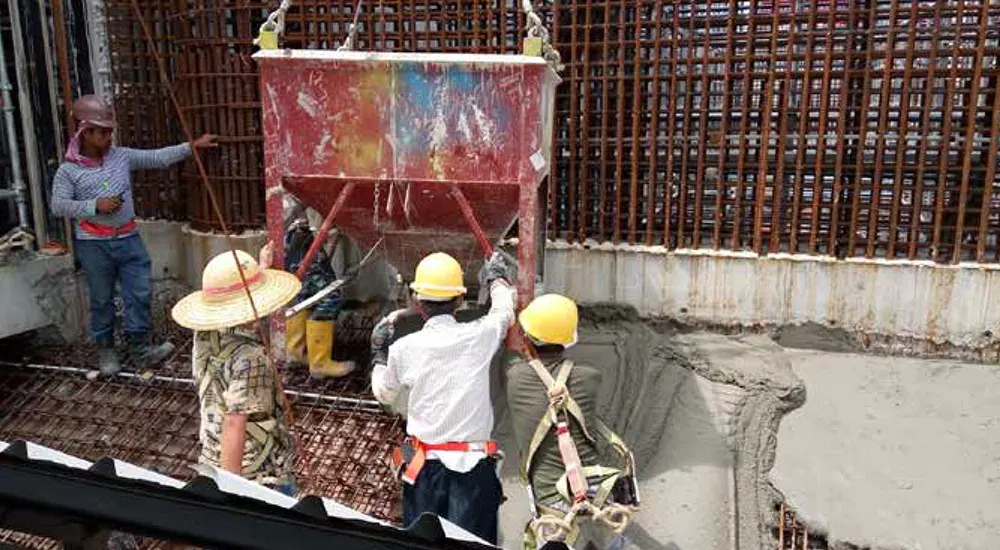
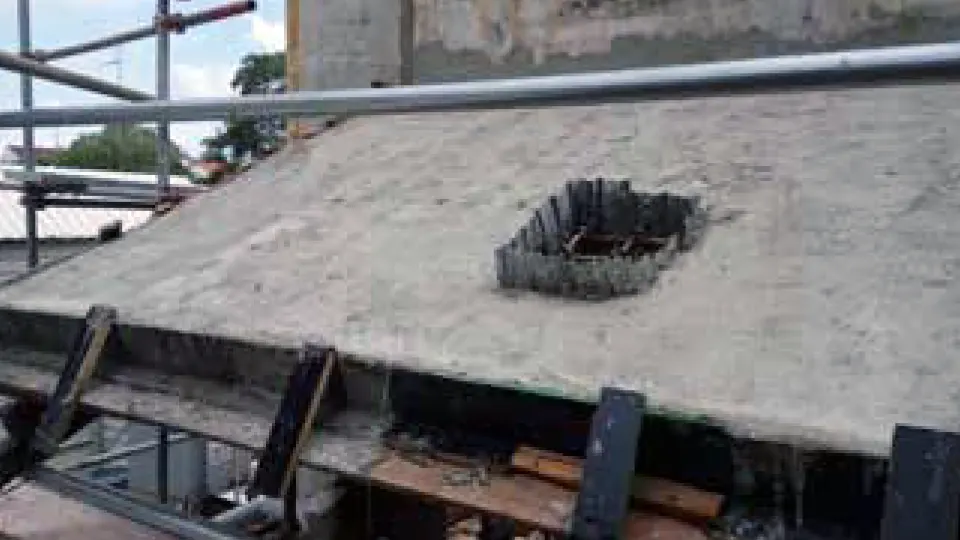
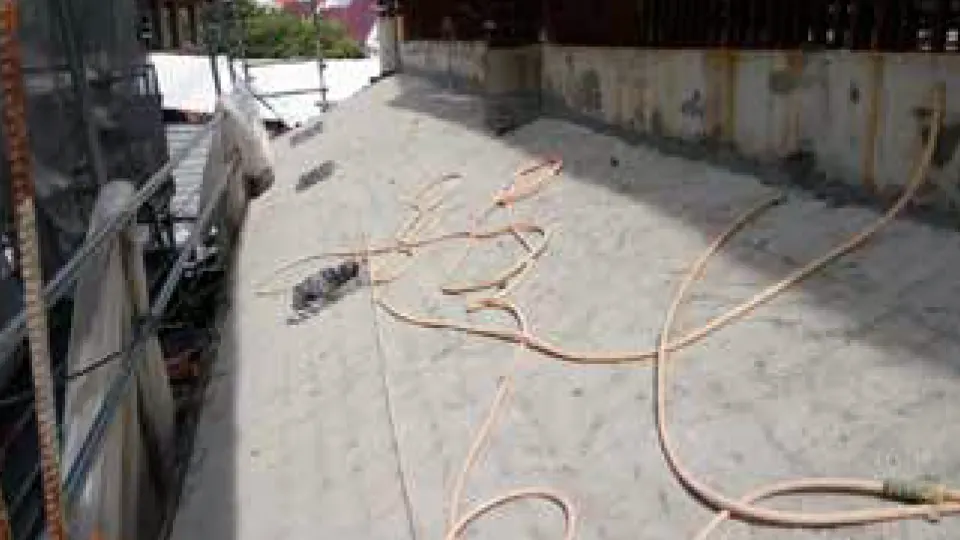
Lightherm is added into structural grade concrete at a very minimal dosage to reduce the weight of regular concrete while retaining the compressive strength.
At densities of 1400–2000 kg/m³, LIGHTHERM structural lightweight concrete achieves compressive strength up to Grade 40 (40 MPa) — equivalent to standard structural concrete, at 20–30% lower dead weight. This allows engineers to reduce foundation loads and structural member sizes, delivering cost savings in both materials and substructure.
Frequently Asked Questions (FAQ)
What is LIGHTHERM and how is it different from regular EPS beads?
LIGHTHERM is an EPS-based lightweight aggregate pre-coated with Vodapruf’s patented VODA-Additives — a three-part formulation of Polymer Adhesion Agent, Static Modification Agent, and Surface Tension Modification Agent. Unlike plain EPS beads, LIGHTHERM beads bond evenly to cement and plaster, making them suitable for structural and thermal construction applications.
What fire rating does LIGHTHERM have?
LIGHTHERM achieves Class A1 fire classification — the highest non-combustible rating under EN 13501-1 — when used in plaster and screed applications. This makes it suitable for high-rise residential, commercial, and industrial buildings where fire safety compliance is mandatory.”
Can LIGHTHERM be used as a thermal insulation plaster?
Yes. At low densities (140–350 kg/m³), LIGHTHERM Thermal Plaster delivers k-values of 0.041–0.12 W/m·K — significantly lower than sand-cement plaster — making it suitable for wall insulation, anti-condensation layers, and external insulation render systems.
Is LIGHTHERM certified in Singapore?
Yes. LIGHTHERM is certified by the Singapore Green Building Council (SGBC) and is regularly specified by Singapore-based M&E and structural consultants for Green Mark projects.
What densities are available?
LIGHTHERM can be mixed and supplied from 140 kg/m³ (ultra-lightweight insulation plaster) up to 2000 kg/m³ (structural lightweight concrete Grade 40). Refer to the mix design table on this page or contact our technical team for a project-specific mix design.
Download Center
Browse and download product brochures, test reports, and installation guides.
LIGHTHERM General Info
LIGHTHERM Certifications and Test Reports
- LIGHTHERM: Certificate of Conformity
- LIGHTHERM: SGBC (Singapore Green Build Council) Certificate
- LIGHTHERM: Toxicity Report (BS 6853L:1999 Annex B)
- LIGHTHERM: Non Combustible Test for Materials (BS 476: Part 4: 1970)
- LIGHTHERM: Classification of Reaction to Fire(EN 13501-1:2007 +A1:2009)
- LIGHTHERM: BS EN ISO 1182:2010 “Non-Combustibility Test”
- LIGHTHERM: BS EN ISO 1716:2010 “Determination of the Gross Heat of Combustion”
- LIGHTHERM: BS EN 45545-2:2013 +A1:2015 Annex C , Method 1 (Smoke Chamber)