
 English
 Arabic
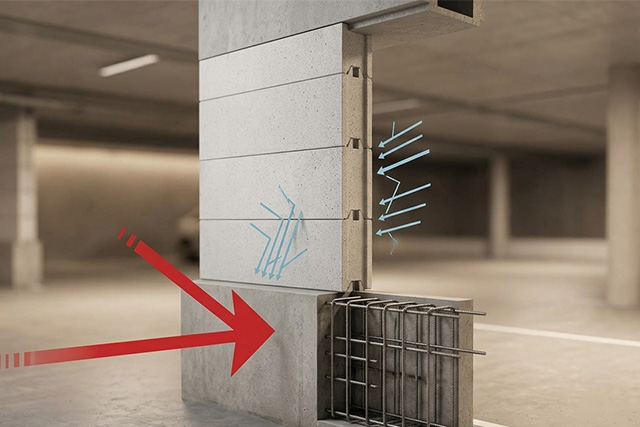
Key Takeaways
- Cut, seal, done — no steel needed for MEP penetrations: Service openings up to ~600mm wide can be cut directly into the vPanel and sealed. No structural support required — it’s the simplest and cheapest scenario.
- Reinforced vPanel acts as a lintel — saving real money: For doors and standard windows up to ~1.5m–2.0m wide, a reinforced panel spanning above the opening eliminates the need for a separate steel lintel entirely.
- Large openings beyond 2.0m–2.5m need structural steel: Roller shutters and wide bays require a steel I-beam or column frame. The vPanel infills the solid wall areas around the steel — there is no way around this for large spans.
- Shop drawings resolve every opening upfront: Vodapruf prepares detailed shop drawings before installation — showing exactly where panels are cut, where lintels go, and where steel is required. No surprises on site.
- Real cost savings are possible: On a recent infrastructure project, using reinforced panels as lintels for standard openings eliminated over 30 individual steel lintels from the bill of quantities.
Introduction
Every ALC panel wall will have openings. The question isn’t whether you’ll need them — it’s how to handle them properly without over-engineering (wasting money on unnecessary steel) or under-engineering (compromising the wall).
From experience across hundreds of projects in Singapore, wall openings fall into three clear scenarios. Each has a different solution, different cost implication, and a different level of structural support required.
This guide covers all three — with real project photos and shop drawings so you know exactly what to expect.
Scenario 01 — Service Penetrations (MEP Openings)
Pipes, conduits, ducts, cable trays — small to medium cutouts
These are the most common openings on any project. Mechanical, electrical, and plumbing (MEP) services need to pass through walls — aircon ducts, water pipes, electrical conduits, fire service risers.
The openings are typically small (50mm to 300mm for pipes) or medium-sized rectangular cutouts (up to about 600mm × 400mm for duct penetrations).
The Solution: Cut Directly Into the Panel
ALC is one of the easiest construction materials to cut. Unlike concrete blocks or brickwork, vPanel can be cut cleanly with a standard panel saw, reciprocating saw, or even a hand saw for smaller penetrations. The material doesn’t shatter, doesn’t throw out dangerous fragments, and produces minimal dust compared to concrete.
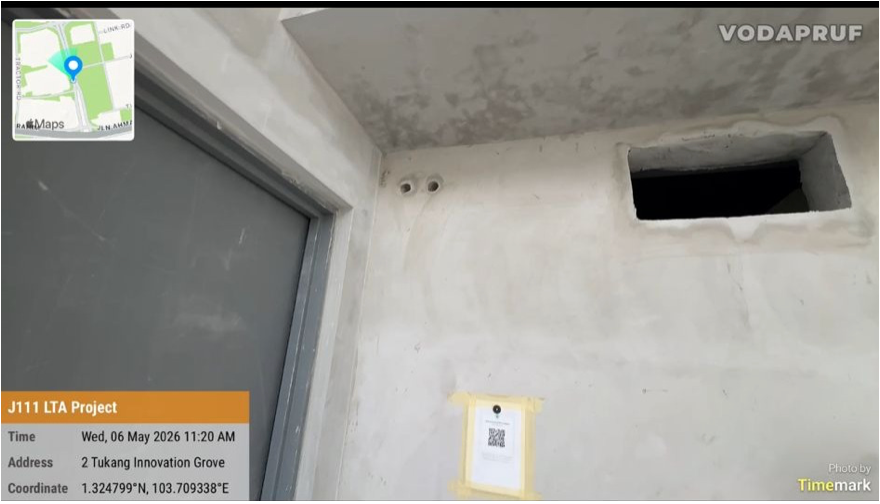
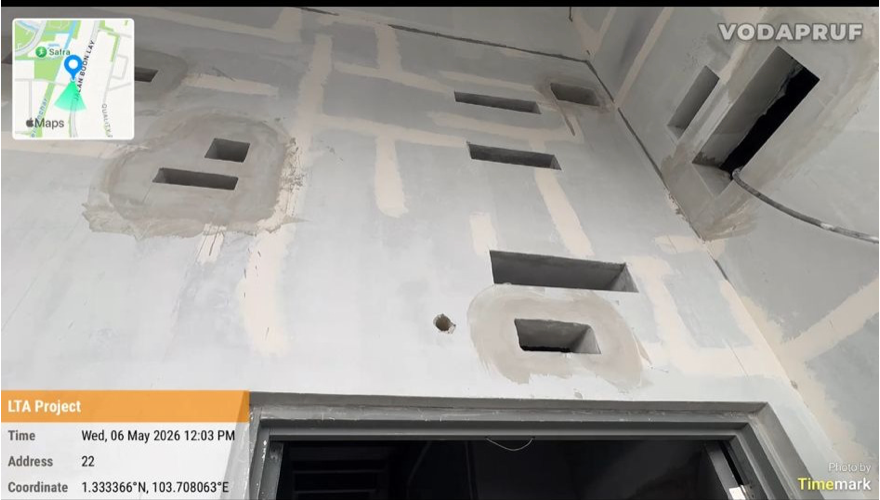
After Cutting
- Install the service (pipe, duct, conduit) through the opening
- Fill gaps around the service with fire-rated sealant or mineral wool, depending on the fire rating requirement
- For fire-rated walls, the penetration seal must match the wall’s fire rating (e.g., 2-hour or 4-hour)
- Skim coat or plaster over the patched area to restore the wall surface
✓ No extra steel needed
Service penetrations up to about 600mm wide do not compromise the panel’s structural integrity. Just cut, install, seal, and finish. This is the simplest and cheapest scenario.
Scenario 02 — Small to Medium Openings (Doors & Windows)
Door frames, standard windows, louvres — openings up to ~1.5m–2.0m wide
This is where it gets interesting — and where vPanel can save you real money compared to conventional wall systems.
In traditional blockwork or drywall construction, every door and window opening needs a lintel — typically a steel angle or concrete beam spanning across the top of the opening to carry the weight of the wall above. That’s extra steel, extra labour, extra coordination, and extra cost.
The Solution: Panel Acts as Lintel
When the panel is manufactured with internal steel reinforcement (steel rods embedded during production), it has sufficient bending capacity to span across small to medium openings. A horizontal panel placed above a door or window opening carries the wall load above it — no separate steel lintel needed.
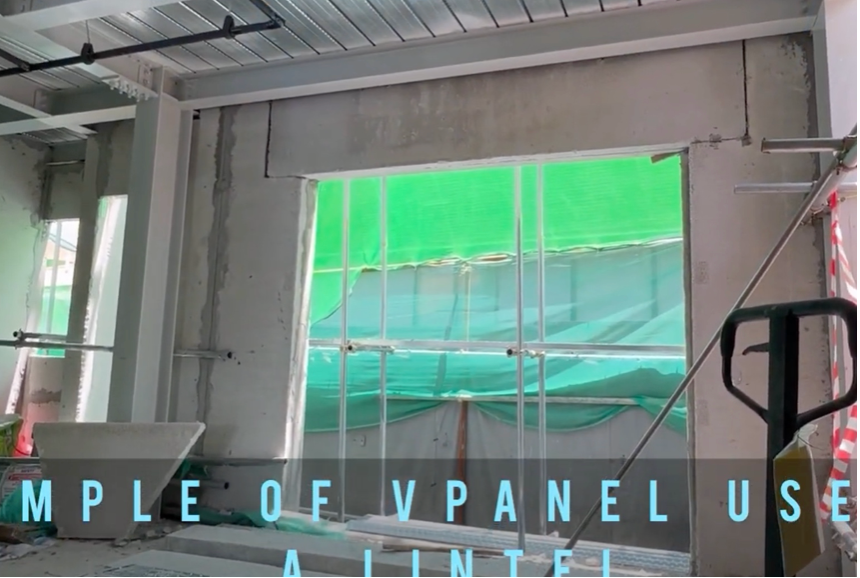
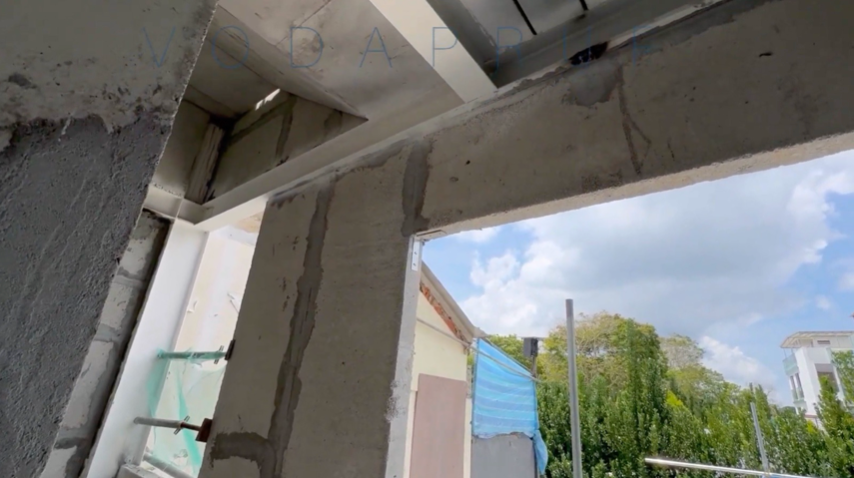
Left: vPanel spanning horizontally across a window opening, acting as the lintel | Right: Close-up: reinforced panel spans the opening and bears on wall panels at each side
Why This Matters for Your Project Cost
- Eliminate steel lintels: No need to fabricate, deliver, and install separate steel angles or beams above each opening.
- Faster installation: The installer lays panels continuously; the lintel panel is just another panel in the sequence.
- Cleaner finish: No steel protruding above the opening that needs to be boxed in or plastered over.
- Fewer trades on site: Your panel installer handles the lintel as part of the wall installation.
This works because panels for high-load applications (such as 3 kPa lateral load designs) are manufactured with internal reinforcement — typically 2 layers of 5mm steel rods, 6 to 8 rods per layer, depending on the span.
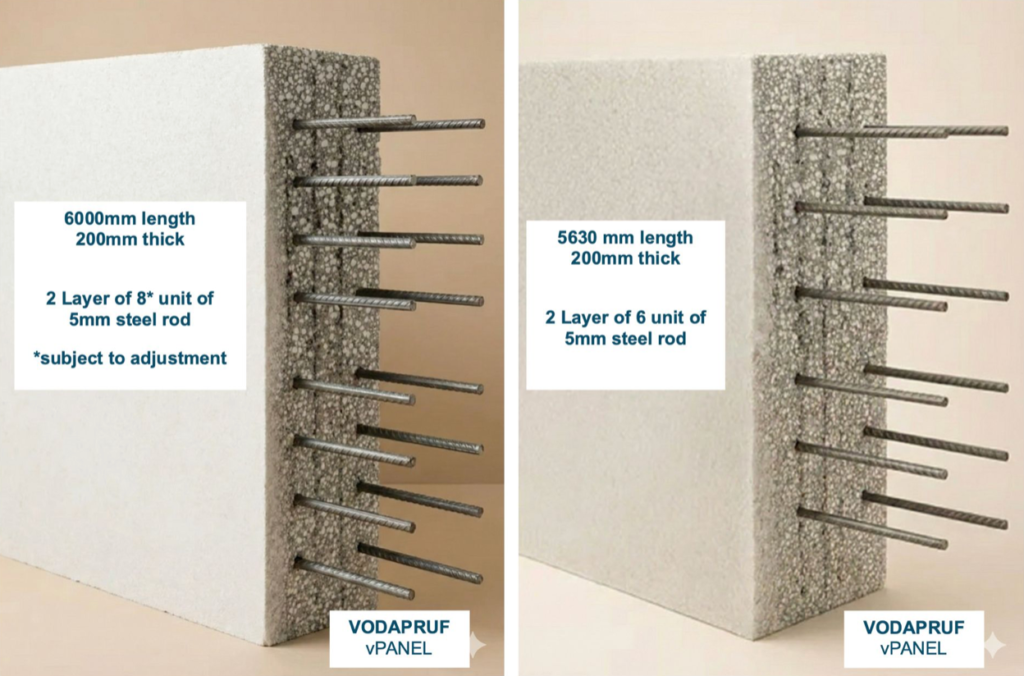
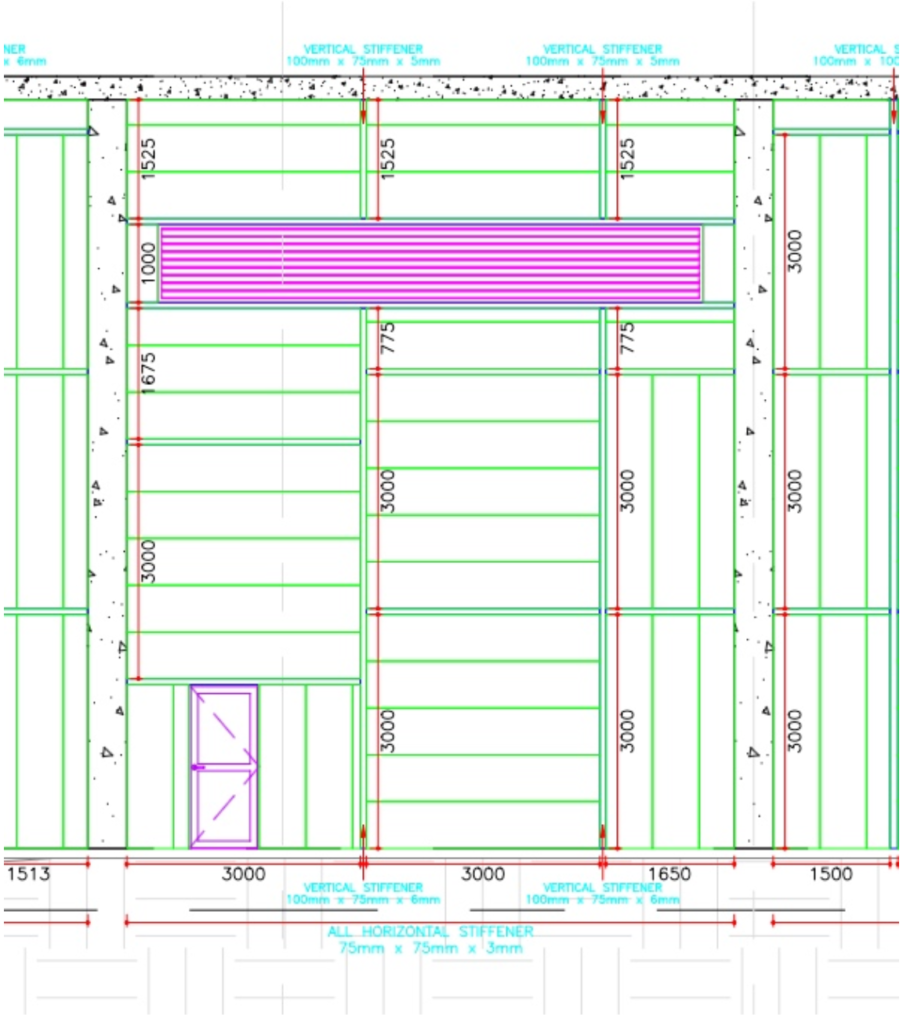
Panel acts as lintel — significant cost savings possible
For openings up to about 1.5m–2.0m wide, a reinforced vPanel can span across the top as a structural lintel, eliminating the need for separate steel. Vertical stiffeners at the sides of the opening are still recommended. This is the sweet spot for cost optimisation.
Scenario 03 — Large Openings (Roller Shutters, Wide Spans)
Openings exceeding 2.0m–2.5m width — structural steel is unavoidable
Some openings are simply too wide for any panel to span across. Roller shutter openings, full-width window bays, loading dock doors, wide corridor connections — when the opening exceeds approximately 2.0m–2.5m in width, a reinforced panel alone cannot reliably carry the wall above.
The Solution: Structural Steel Framing
In these cases, structural steel is required — there is no shortcut. The typical solutions are:
- Steel I-beam or channel: Spanning across the top of the opening as a dedicated lintel beam, supported by the structural frame at each end.
- Additional steel columns: At the sides of the opening to carry the lintel and transfer loads down to the foundation.
- Heavy-duty stiffeners: 100×75mm angles or larger, framing the opening and tying back into the main structure.
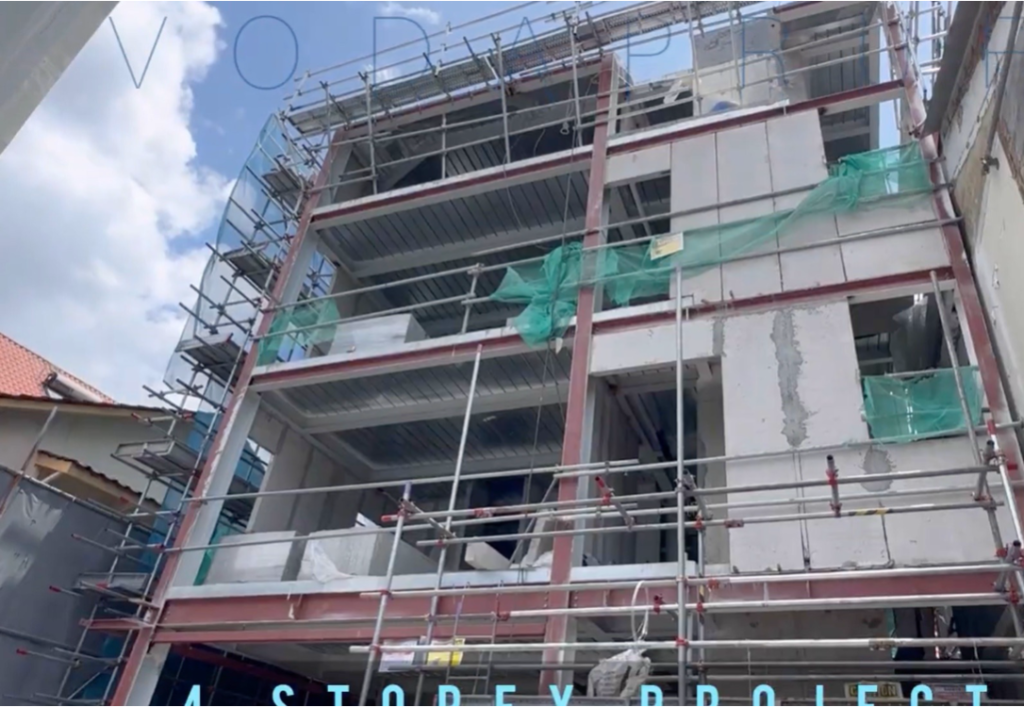
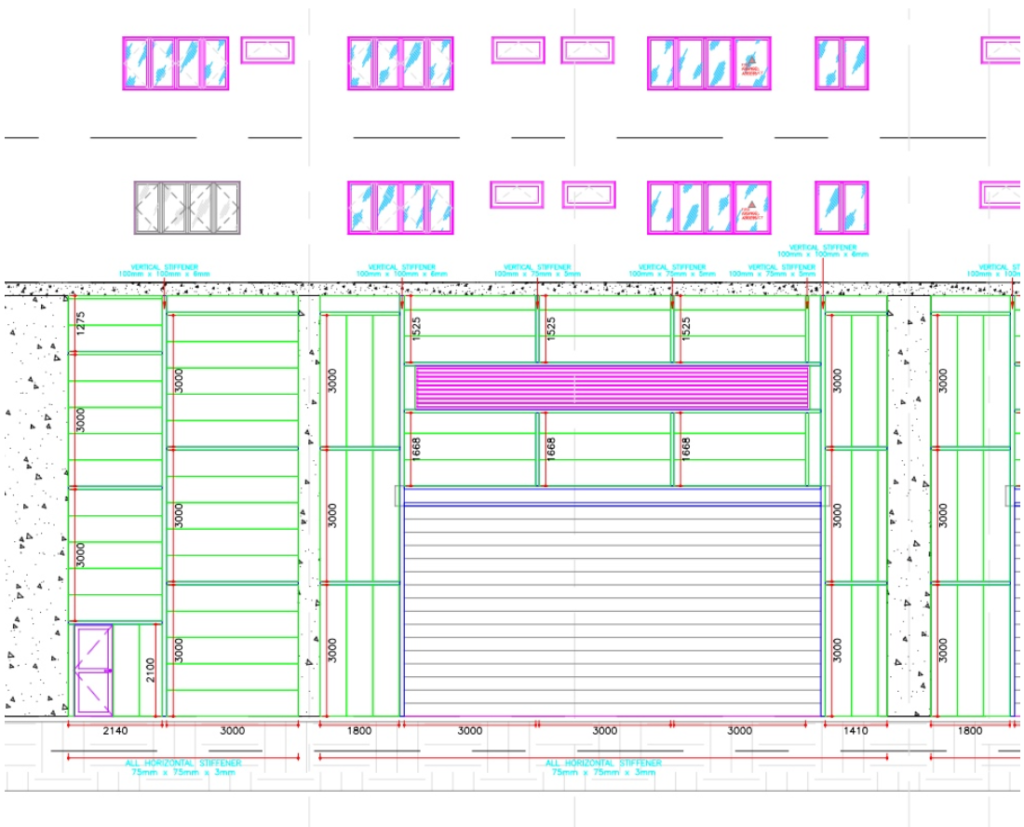
The structural steel frame is erected first — columns, beams, lintels. Then the vPanel is installed as infill between the steel members. The panels slot between the steel, secured with brackets and adhesive. The result is a composite wall system: steel carries the load at the openings, ALC panels fill the solid wall areas.
This is standard practice on industrial, commercial, and infrastructure projects — including LTA facilities, factory buildings, and multi-storey commercial developments.
Structural steel required — coordinate with your structural engineer
For openings wider than ~2.0m, you need a steel lintel beam, steel columns, or both. The panel alone cannot span these distances. Factor in the steel fabrication and installation time when planning your programme.
Quick Decision Guide
Most projects have a mix of all three scenarios. Use this table to identify which solution applies to each opening before installation — not during.
| Opening Type | Typical Size | Solution | Extra Steel? | Cost Impact |
| Service penetrations (pipes, ducts, conduits) | 50mm – 600mm | Cut directly into panel | None | Minimal — just cutting & sealing |
| Doors & standard windows | Up to ~1.5m – 2.0m | Reinforced panel acts as lintel | Side stiffeners only | Saves lintel steel cost & labour |
| Large openings (roller shutters, bays) | Over 2.0m – 2.5m | Steel I-beam / column framing | Full steel frame | Additional steel fabrication |
The Practical Takeaway
A typical project wall might have service penetrations for M&E, standard door openings, and one or two large openings for roller shutters or windows. The key is to identify which scenario applies to each opening before installation begins — not during.
When you send us your architectural drawings, we prepare shop drawings that show exactly how each opening is handled: where the panels are cut, where the lintel panels go, where steel stiffeners are needed, and where full structural steel is required. This planning happens upfront so there are no surprises on site.
The cost savings from Scenario 02 (panel as lintel) can be substantial on projects with many door and window openings. On a recent infrastructure project, using reinforced panels as lintels for standard openings eliminated over 30 individual steel lintels from the bill of quantities — saving both material cost and installation time.
Send Us Your Drawings — We’ll Plan Every Opening
We prepare detailed shop drawings for every project — panel layout, stiffener positions, and opening solutions. No charge for the engineering; it’s part of our service.
📞 Malaysia: +60 16 217 7155
📞 Singapore: +65 9796 5910
🌐 vodapruf.com
Frequently Asked Questions (FAQ)
What is the maximum size of a service penetration that doesn’t require additional structural support in a vPanel wall?
Service penetrations up to approximately 600mm wide do not compromise the structural integrity of a vPanel wall and require no additional steel framing or support. For circular pipe penetrations, sizes from 50mm up to 300mm diameter are straightforward cut-and-seal operations. Beyond 600mm, the opening begins to enter Scenario 02 territory and the structural implication should be reviewed with your engineer or Vodapruf’s technical team.
What does “reinforced vPanel” mean — how is it different from a standard panel?
A reinforced vPanel has steel rods embedded within the panel body during the manufacturing process, giving it bending and spanning capacity beyond a standard un-reinforced panel. For lintel applications, the typical specification is 2 layers of 5mm steel rods with 6 to 8 rods per layer, depending on the span width and design load. Standard panels without internal reinforcement should not be used as lintels spanning across door or window openings.
Is it true that ALC panels always need a steel lintel above every door or window opening?
No, this is one of the most common misconceptions about ALC panel construction. For openings up to approximately 1.5m–2.0m wide, a reinforced vPanel installed horizontally above the opening can carry the wall load above it, acting as a structural lintel without any separate steel. A steel lintel only becomes unavoidable when the opening exceeds approximately 2.0m–2.5m in width, where the span is too great for even a reinforced panel to handle reliably.
How do I know which opening solution to specify before submitting my architectural drawings?
Use the opening width as the primary filter: up to 600mm is Scenario 01 (cut and seal), 600mm to 2.0m is typically Scenario 02 (reinforced panel as lintel), and above 2.0m–2.5m requires Scenario 03 (structural steel framing). When you submit architectural drawings to Vodapruf, the team will assess every opening, confirm which scenario applies, and produce shop drawings showing the exact panel layout, lintel positions, and stiffener locations — at no additional charge.
What happens if a service penetration is not properly fire-sealed on a fire-rated wall?
An unsealed or incorrectly sealed penetration voids the fire rating of the entire wall at that point — which can result in SCDF (Singapore) or BOMBA (Malaysia) non-compliance during inspection and may require costly remediation before a Certificate of Statutory Completion or Certificate of Fitness can be issued. The penetration seal must match the wall’s certified fire rating: a 4-hour rated wall requires a 4-hour rated penetration seal, using fire-rated sealant, mineral wool, or an intumescent collar depending on the pipe or duct material. Always verify the seal specification with your fire protection consultant before closing up the wall.