
 English
 Arabic
Key Takeaways
- No lintels required: A 6m vertical vPANEL spans the full floor-to-floor height as a single element, eliminating the need for horizontal steel lintels and intermediate stiffeners at any point along the wall.
- Fewer joints, lower cracking risk: Vertical installation produces only vertical joints between adjacent panels — the most vulnerable joint in any hybrid wall (the 3m panel-to-block junction) simply does not exist.
- Superior acoustic performance: The 200mm vPANEL achieves STC 42–46 (bare wall), versus STC 37–39 for a 100mm panel — a meaningful upgrade for occupants in noise-sensitive buildings.
- 4-hour fire rating as standard: The 200mm vPANEL carries a 4-hour fire rating, compared to 2 hours (with detailing) for a hybrid panel-plus-block system.
- One product, one crew, one lift: The vertical vPANEL method requires only a panel crew and a crane lift — no block layers, no secondary materials, no mid-wall junction to detail.
Introduction
When a project calls for walls taller than 3 metres, most contractors default to the same hybrid solution: ALC panels for the lower section, then lightweight blocks hand-stacked above. It feels practical. Panels go up fast below, blocks handle the top — done.
But this approach carries a hidden cost. Every hybrid wall introduces a material junction at 3 metres, a steel lintel to bridge it, additional mortar joints above, and two separate trades to coordinate. What looks like a straightforward workaround becomes a source of structural risk, programme delay, and budget overrun.
Vodapruf 200mm vPANEL, installed vertically at the full 6-metre floor-to-floor height, eliminates all of these problems in a single product decision.
This article compares both approaches side by side — from installation method and structural detail through to acoustic, thermal, fire, and water performance.
What Is the Hybrid Approach, and Why Do Contractors Use It?
Option B: Panel Below 3m + Block Above 3m
In the hybrid configuration, 100mm ALC panels are installed horizontally for the lower 3 metres of the wall. Above that point, ALC blocks are hand-stacked to fill the remaining height.
The reason contractors choose this approach is simple: lifting constraints. Standard ALC panels are manufactured up to 6 metres in length, and many site teams assume that crane-lifting a full-height panel is either impractical or cost-prohibitive. Blocks, by contrast, can be moved and stacked manually with no equipment.
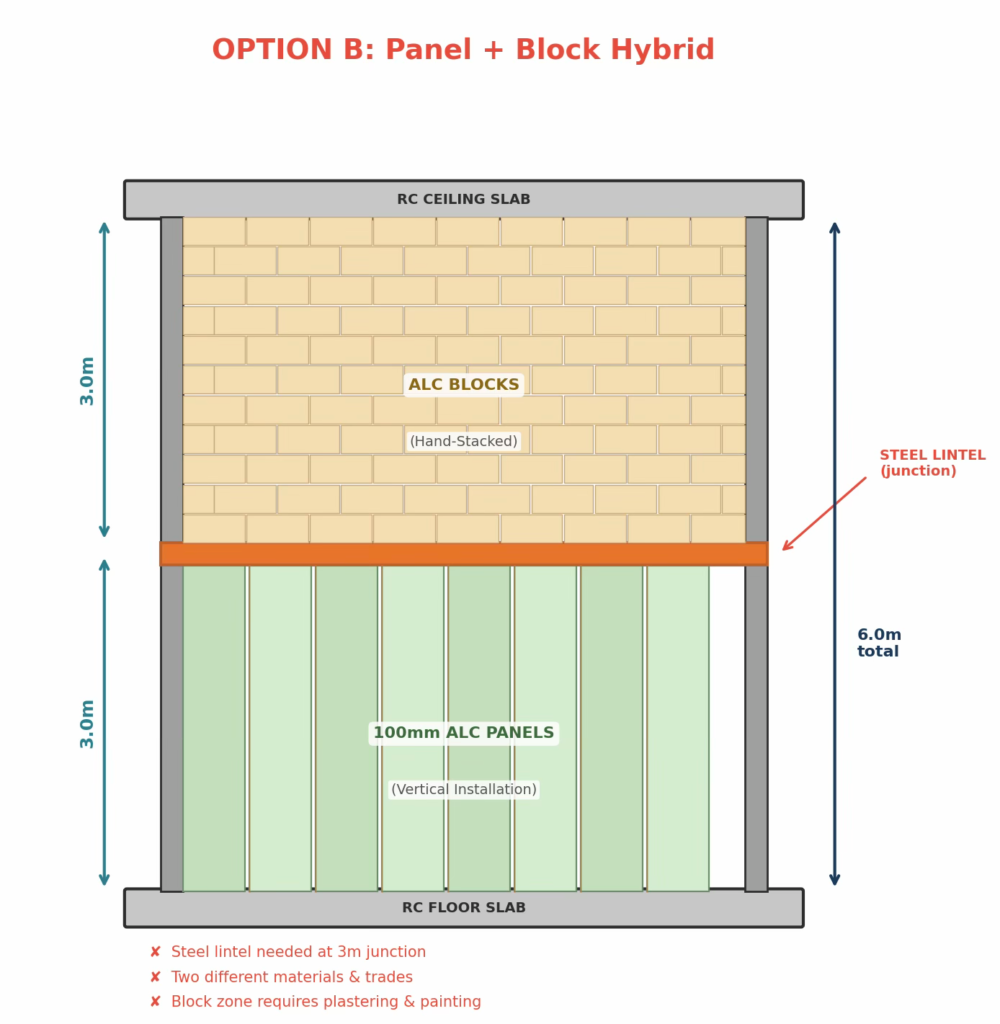
Fig 1: Hybrid approach — panel below 3m, block above 3m, with steel lintel at junction
The tradeoff is significant:
- Lintels and stiffeners required at every junction. Where the panel zone meets the block zone at 3m, a horizontal steel lintel must bridge the transition. This adds steel procurement cost, fabrication lead time, and on-site welding to the programme.
- More joints means greater cracking exposure. Horizontal panel installation produces a joint at every 600mm of wall height. The block section above adds further mortar joints. The panel-to-block junction at 3m is the most structurally vulnerable point in the wall.
- Thickness mismatch creates alignment problems. The 100–125mm steel stiffener profile required at 6m height does not flush cleanly with panel faces, creating finishing complications.
What Is the 6m Vertical vPANEL Method?
Option A: 6m × 200mm vPANEL Installed Vertically
A 200mm-thick Vodapruf vPANEL, manufactured to a 6-metre length, is crane-lifted and secured slab-to-slab in a single operation. L-brackets and anchor bolts at the top and bottom connections provide all the structural fixing required. No intermediate supports, no mid-wall junction, no secondary materials.
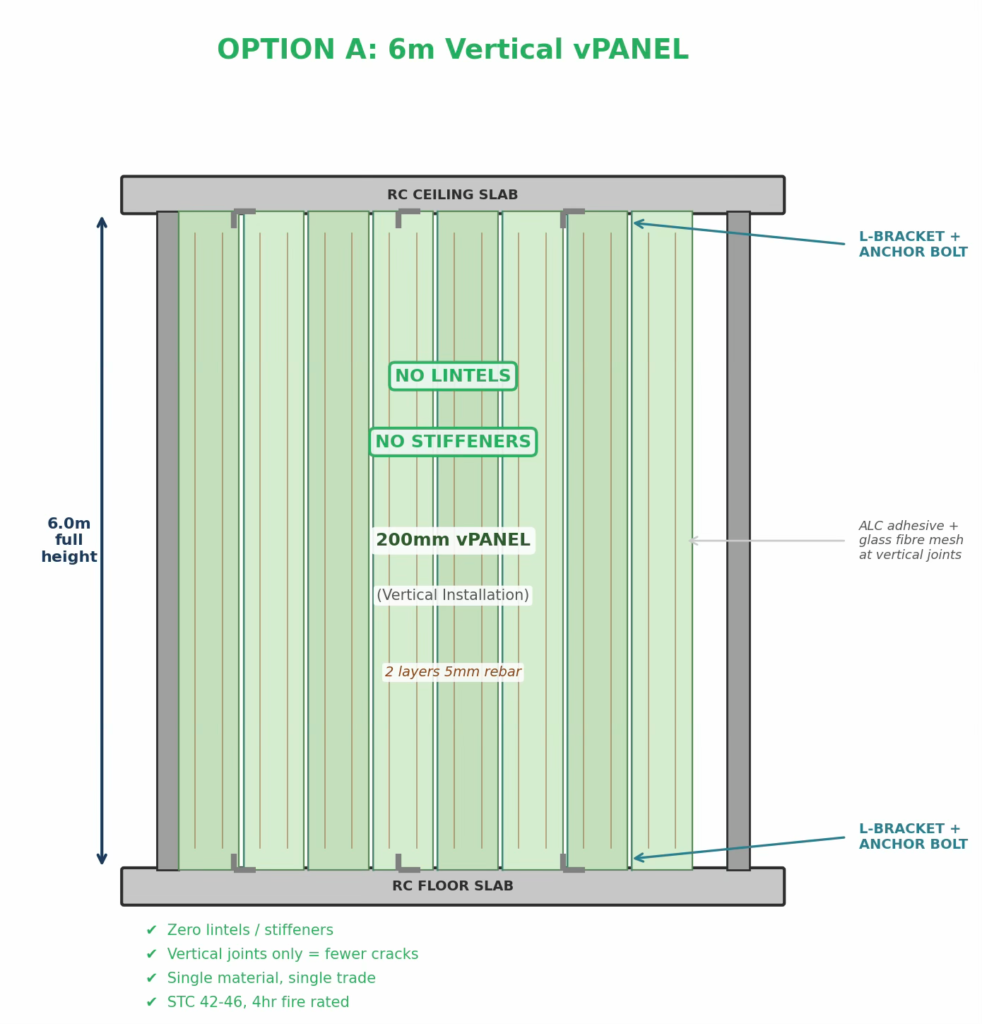
Fig 2: 6m vertical vPANEL — single product, slab-to-slab, L-bracket connections
This approach has been validated on live projects. vPANEL was installed vertically at 6m height at the DayOne Data Centre, Johor Bahru — demonstrating full-height panel walls running continuously from slab to slab, with L-bracket connections at the ceiling interface.
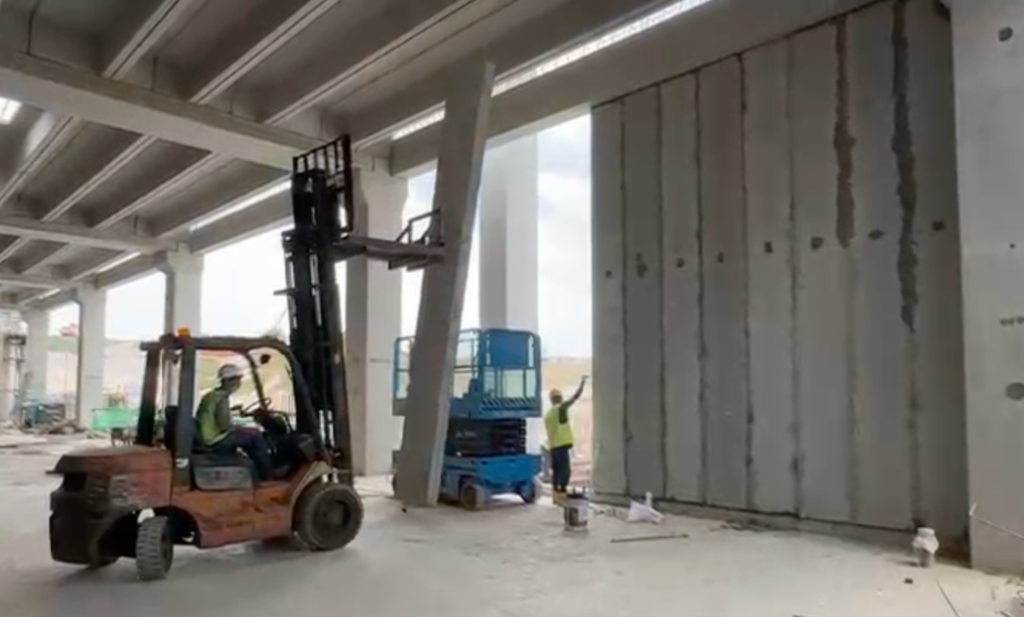
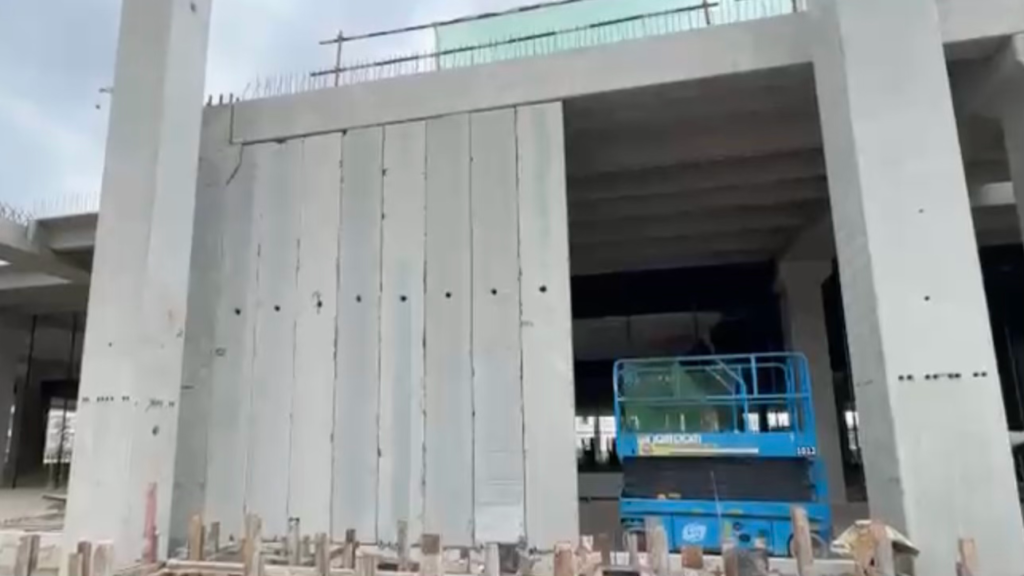
Project photo: vPANEL Application 6m @ DayOne Data Centre, Johor Bahru
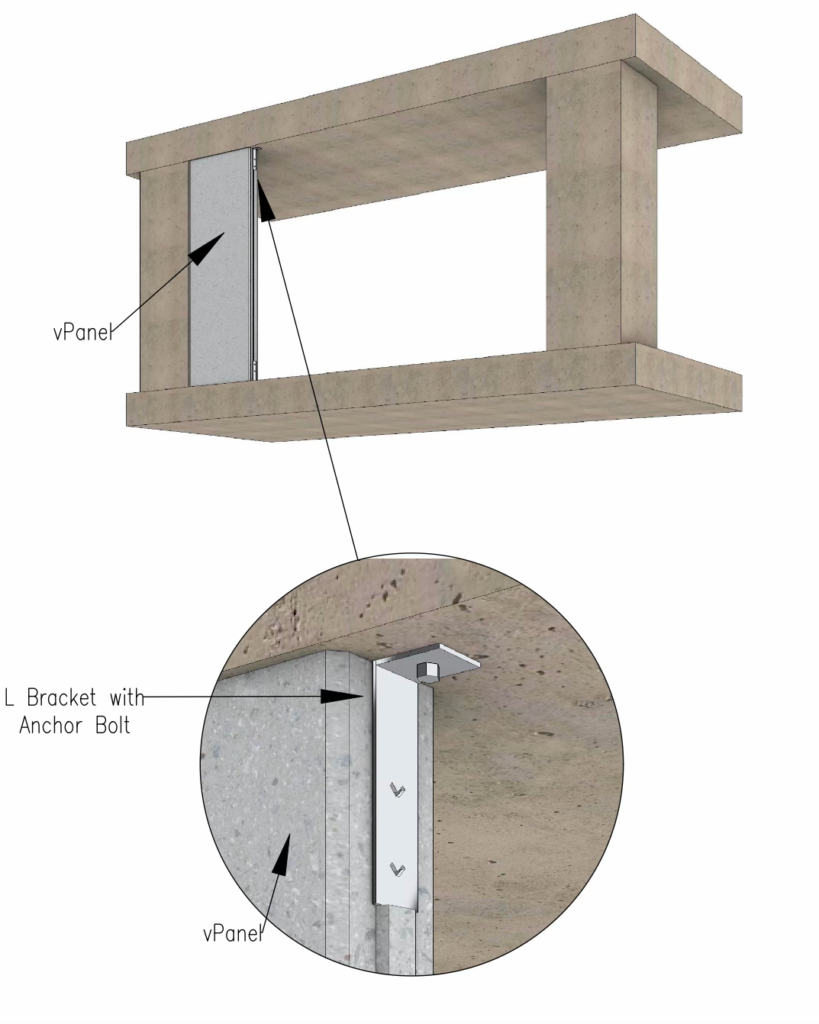
Bracket connection detail: L-bracket at ceiling — anchor bolt secures vPANEL to RC slab
Why Does the 6m Vertical vPANEL Outperform the Hybrid Approach?
1. Lintels and Stiffeners Are Eliminated
A panel running the full floor-to-ceiling height behaves as a continuous structural element. With no mid-height material transition, there is no requirement for horizontal lintels or intermediate stiffeners at any point along the wall.
The panel itself spans across door and window openings, effectively acting as an integrated lintel — up to 9 metres in length.
The cost saving is real. On projects with multiple openings, savings from omitting stiffener steel alone can offset the price difference between 100mm and 200mm panels. Fabrication lead time and welding labour are also removed from the programme.
2. Fewer Joints, Lower Cracking Risk
Vertical installation shifts the joints to run between adjacent panels — vertically along the wall face — rather than horizontally across the wall height. This eliminates the regular horizontal joints produced by a horizontal panel layout, and removes the 3m junction entirely.
Fewer interfaces between lightweight material and the structural frame means fewer potential crack paths. The ALC adhesive and glass fibre mesh tape system used at vertical joints is a well-established detail that handles building movement reliably over the life of the structure.
3. 200mm Thickness: Meaningful Performance Gains Across Three Categories
Stepping up from 100mm to 200mm produces measurable improvements in three critical performance areas:
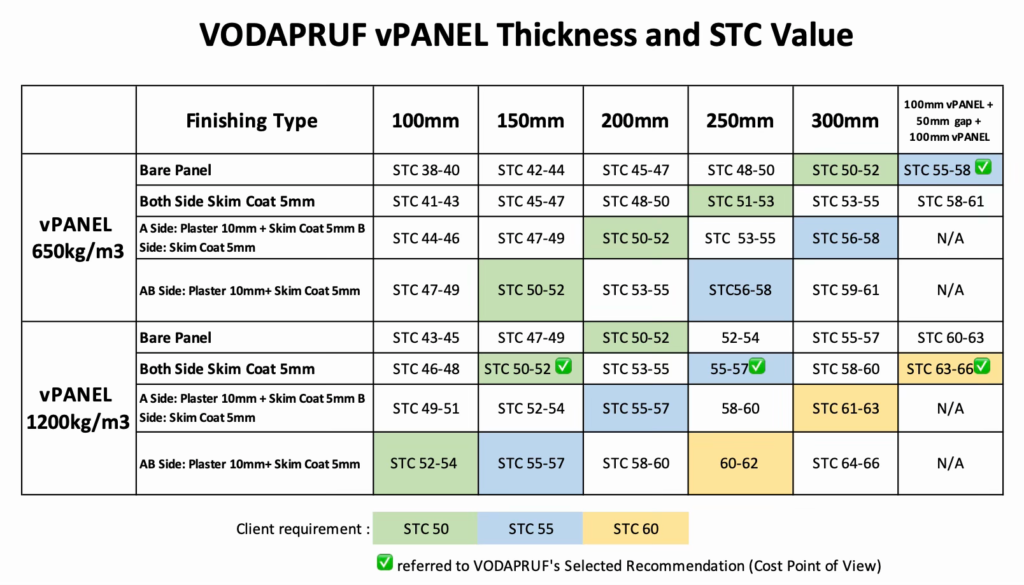
Acoustic — STC 42–46 (bare wall) This comfortably exceeds the STC 37–39 of a 100mm panel. For buildings near industrial activity or high-traffic roads, the difference is clearly perceptible to occupants — and often decisive for building certification.
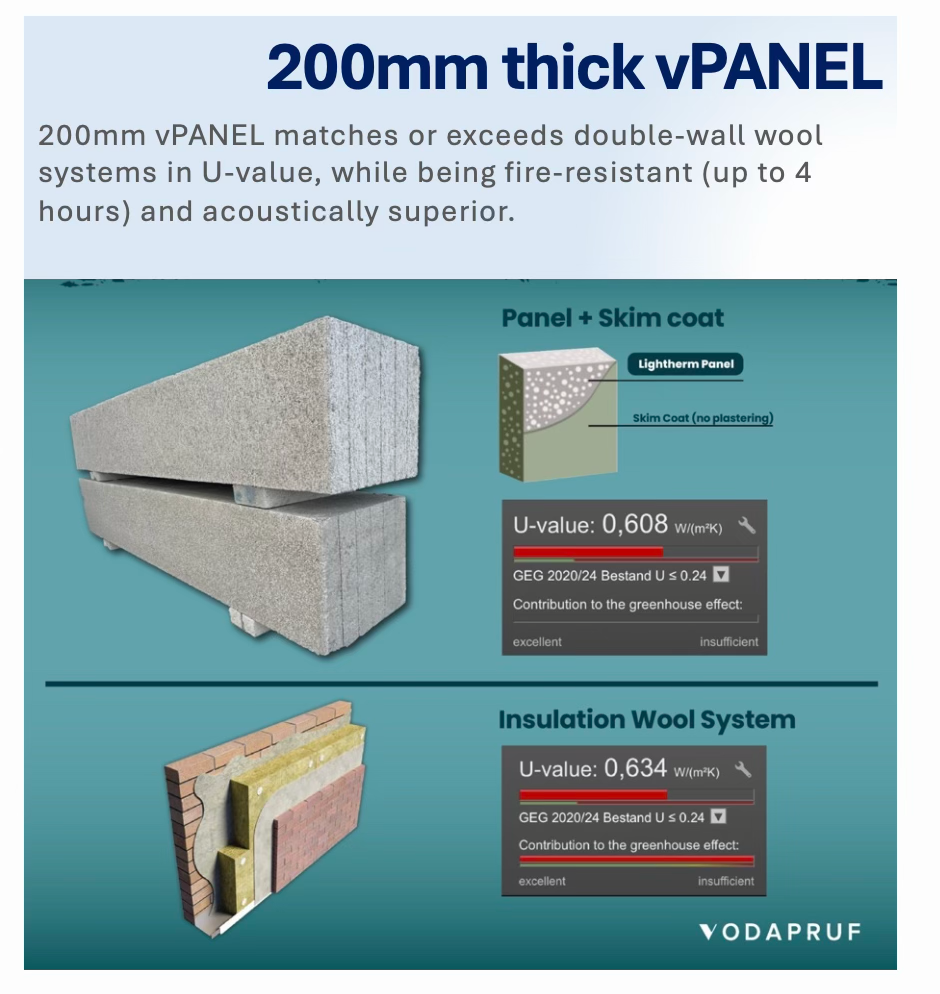
Thermal Insulation Greater cross-section thickness delivers substantially improved thermal resistance, reducing the cooling load in tropical climates. This is especially valuable for walls exposed to direct sun or for data centre and cold storage applications where temperature control is critical.
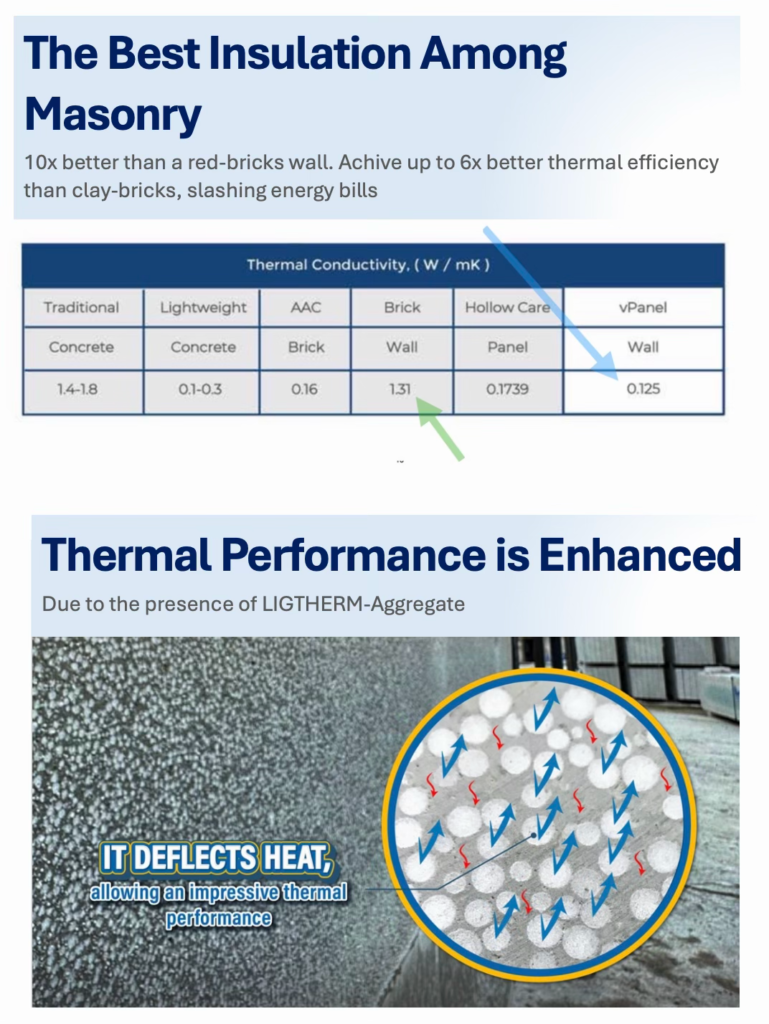
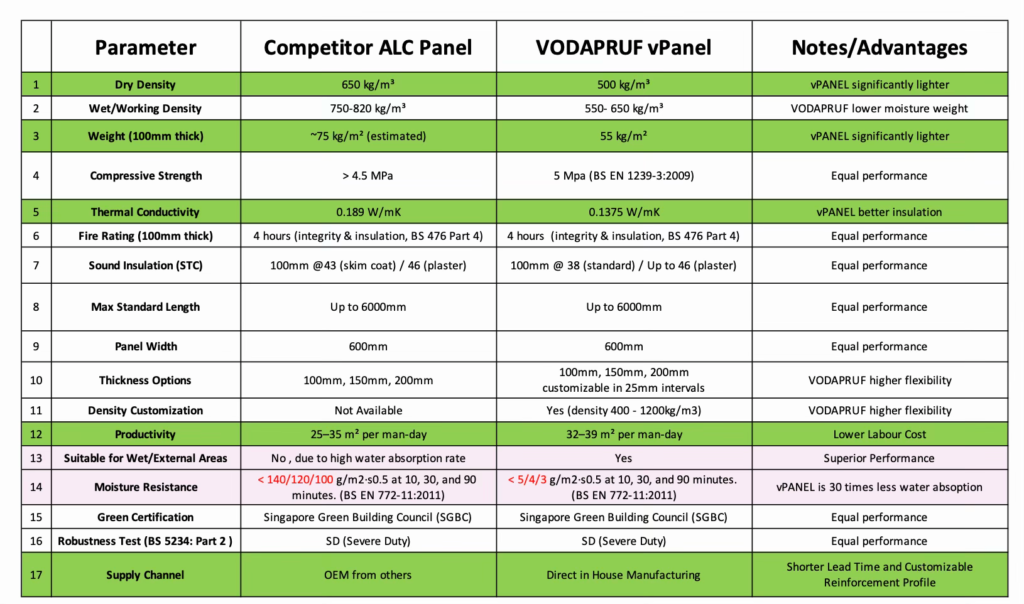
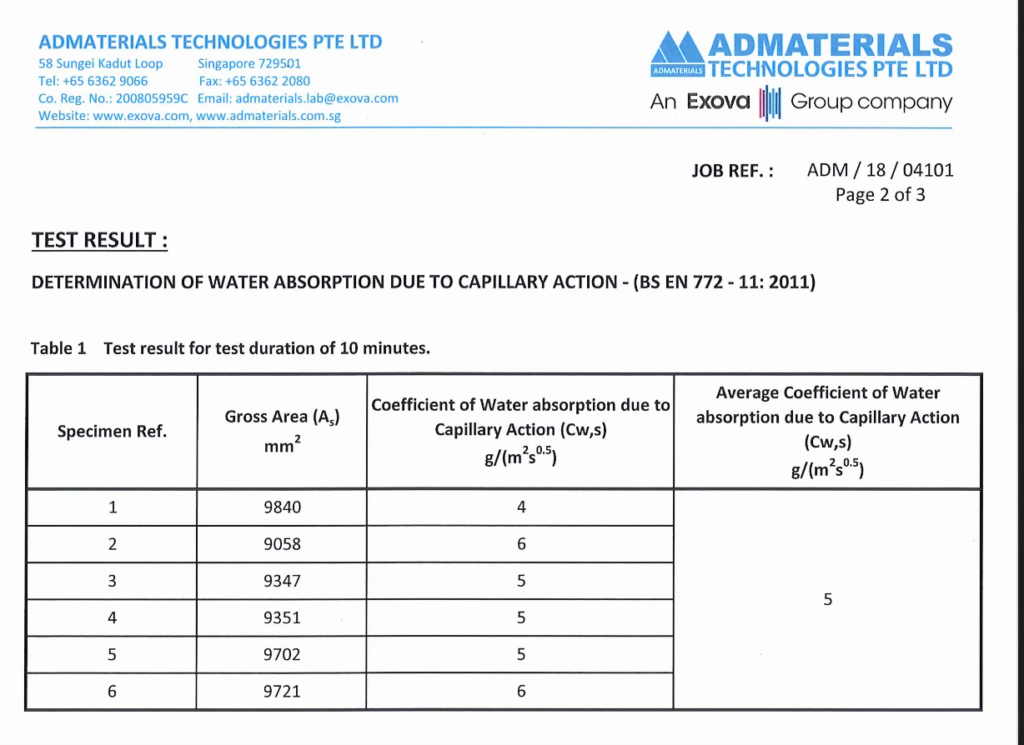
Water Resistance 200mm ALC panels offer best-in-class resistance to water absorption. The added material depth means any moisture that penetrates the outer surface must travel further before reaching the interior face — making 200mm the right specification for external-facing walls and wet-area applications.
Head-to-Head Comparison
| Criteria | Option B: Hybrid | Option A: 6m Vertical |
| Materials | 100mm ALC panel + ALC block | 200mm vPANEL only |
| Installation | Vertical panel installation + hand-stack block | Vertical, crane-lift, one piece |
| Lintels / Stiffeners | Required at junction and block zone | None required (up to 9 metre length) |
| Horizontal Lintel | Every 3m height | None (vertical joints only) |
| Crack risk | High (many joints, two materials) | Low (fewer joints, single material) |
| STC (bare) | 37-39 | 42-46 |
| Fire rating | 2 hr (with detailing) | 4 hr rated |
| Thermal performance | Adequate (100mm) | Superior (200mm) |
| Water tightness | Standard | Best-in-class |
| Trades required | Panel crew + block layer | Panel crew only |
Who Should Specify the 6m Vertical vPANEL?
The 6m vertical vPANEL is the right specification for any project where:
- Floor-to-floor height exceeds 3 metres — industrial, logistics, data centre, warehouse, or commercial buildings with tall internal walls.
- Acoustic performance is a priority — buildings near roads, industrial zones, or where partition STC requirements form part of the specification.
- Fire rating matters — the 4-hour rating removes the need for additional fireproofing layers and simplifies BOMBA documentation.
- Programme efficiency is critical — one crew, one lift, one material is faster and simpler to coordinate than a hybrid approach requiring two trades.
- External or wet-area walls are involved — the 200mm cross-section provides the best water resistance available in ALC panel format.
Ready to Simplify Your High-Wall Build?
Contact Vodapruf for a complimentary project consultation and sample specifications.
📞 Malaysia: +60 16 217 7155
📞 Singapore: +65 9796 5910
🌐 vodapruf.com
Frequently Asked Questions (FAQ)
Does the 6m vPANEL require a crane?
Yes. Vodapruf vPanel carries the Singapore Green Label, which can be submitted as Yes, a crane or mobile hoist is required to lift and position the panel vertically. This is standard on industrial and commercial new-build sites. For renovation projects where crane access is limited, the vPanel Short Panel (1.5m length, no crane required) is the recommended alternative.
What is the maximum span without stiffeners?
The 200mm vPANEL can span up to 9 metres in length without requiring intermediate stiffeners, making it suitable for tall industrial and data centre walls.
How are the panels fixed at top and bottom?
L-brackets and anchor bolts at the slab interfaces. No tongue-and-groove profiling is required. The bracket detail is simple, field-proven, and does not require specialist fabrication.
What is the STC rating of the 200mm vPANEL?
STC 42–46 (bare wall, no additional lining). This exceeds the STC 37–39 of a 100mm ALC panel and is suitable for most commercial and industrial partition specifications.
Can the 200mm vPANEL be used for external walls?
Yes. The 200mm thickness provides best-in-class water absorption resistance in the ALC panel range, making it suitable for external-facing walls and wet-area applications.