
 English
 Arabic
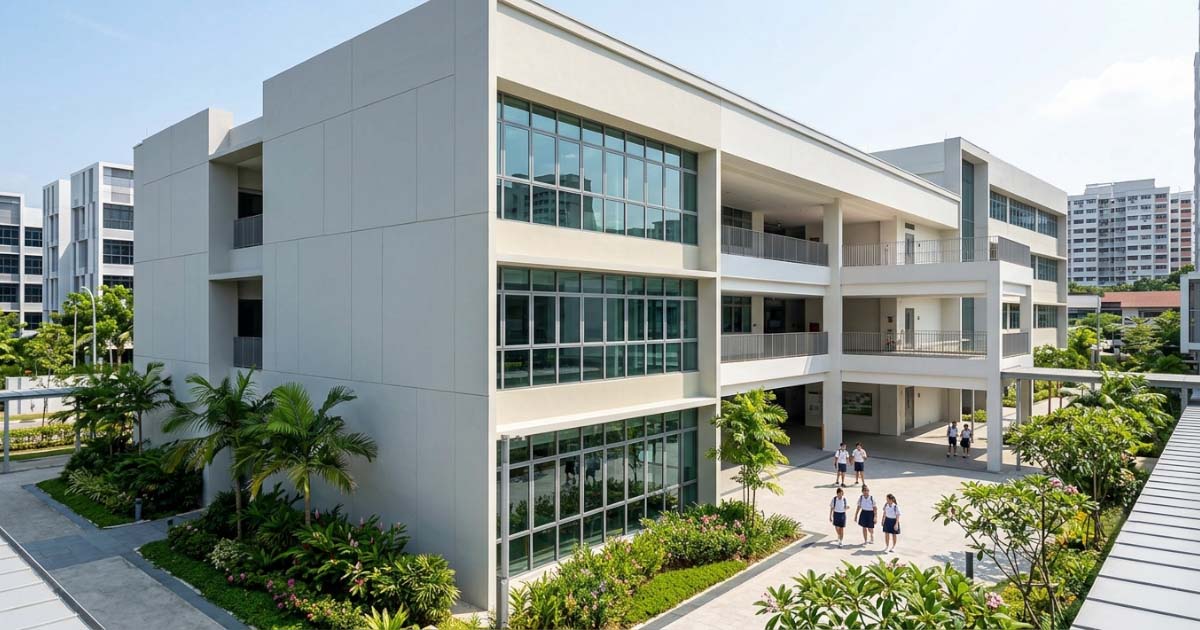
Key Takeaways
- Acoustic separation is a genuine specification driver for schools, where classroom-to-classroom and classroom-to-corridor noise directly affects learning environments, and ALC panel provides denser mass than typical partition materials for this purpose.
- Fire compartmentalisation matters more in occupied institutional buildings than in typical commercial premises, since evacuation of children, staff, or the public during school hours or building operation requires reliable fire-rated separation between wings and floors.
- Construction speed minimises disruption to active facilities, a genuine concern for schools and government buildings that cannot fully close during renovation or expansion works.
- Vodapruf has verified project references across Singapore’s school sector, including Bukit Timah Primary School (3,000 m²), Keng Cheng Primary School (1,800 m²), and an NUS laboratory facility (8,000 m²), alongside HDB and JTC government-sector work.
- ALC panel compares favourably to conventional masonry on both speed and acoustic performance for institutional projects, though the exact acoustic and fire rating required for any specific project should be confirmed against Singapore’s building and fire safety codes.
Architects, quantity surveyors, and government procurement teams working on institutional projects in Singapore face a specific set of wall performance requirements that differ from typical commercial construction. Schools need acoustic separation between classrooms. Government buildings need fire compartmentalisation for critical areas. Nearly all institutional projects need construction that minimises disruption to a facility that may remain partially operational throughout the works. ALC panel, or Autoclaved Lightweight Concrete panel, has become a common specification choice across Singapore’s institutional building sector for these reasons.
Acoustic Separation Between Classrooms and Occupied Spaces
Classroom noise transfer is a well-recognised concern in school design, since disruptive sound between adjacent teaching spaces directly affects learning outcomes. ALC panel provides greater mass and acoustic isolation than lightweight drywall partitions, and its solid cementitious structure performs comparably to a plastered masonry wall for typical classroom-to-classroom and classroom-to-corridor separation.
For schools and other institutional buildings where wall-to-wall noise transfer is a genuine functional concern, acoustic performance should be confirmed against the project’s specific requirements, since exact ratings vary by panel thickness and finishing detail.
Fire Compartmentalisation for Critical Areas
Fire safety design in occupied institutional buildings carries particular weight, since evacuation involves children, staff, patients, or the public during active building operation. ALC panel can achieve fire resistance ratings suitable for compartmentalising critical zones such as electrical rooms, stairwells, and fire-rated corridors within a school or government building.
The specific fire rating required for any compartment depends on the building’s occupancy classification and fire safety design, which is determined by the project’s qualified person and confirmed against Singapore Civil Defence Force requirements before specification.
Construction Speed That Minimises Disruption to Active Facilities
Many institutional projects in Singapore involve renovation, extension, or new construction adjacent to a facility that remains partially or fully operational throughout the works, a school continuing classes, a government office continuing daily operations. ALC panel installs faster than conventional brick or block masonry because it is a dry installation process without mortar curing time between courses. This speed advantage translates directly into a shorter disruption window for the occupied facility, a genuine practical benefit for institutional clients managing construction around an active building schedule.
Sustainability Credentials for BCA Green Mark
Government and institutional projects in Singapore increasingly target BCA Green Mark certification as part of their design brief. ALC panel can contribute to a project’s Green Mark assessment through its lighter weight, which reduces embodied transport energy compared to denser masonry materials, and its manufacturing process, which for some ALC panel products uses meaningfully less energy than the traditional autoclaving process used across the industry.
The specific Green Mark point contribution for any wall material depends on the overall building assessment, and should be confirmed with the project’s Green Mark Accredited Professional rather than assumed from the material choice alone.
ALC Panel Compared to RC Block Walls and Conventional Masonry
Reinforced concrete block walls and conventional brick masonry remain common specifications for institutional buildings in Singapore, and each has genuine strengths. RC block walls offer high structural capacity and are well understood by contractors across the industry. Conventional masonry offers flexibility for irregular layouts and has a long track record in institutional construction.
Where the ALC panel differentiates itself is installation speed and acoustic mass relative to weight. A brick or block wall requires mortar joints that cure over time, plaster render on both faces before finishing, and a corresponding wet-trade curing window that extends the overall wall programme. ALC panel, supplied in factory-manufactured lengths of up to 6 metres, installs without this curing dependency, allowing faster wall completion across a large institutional floor plate. On acoustic performance specifically, a plastered masonry wall and an ALC panel wall of comparable thickness generally deliver similar isolation for typical classroom and office partition requirements, though masonry retains an advantage in raw density for applications requiring maximum sound isolation, such as a specialist music room or an examination hall directly adjacent to a noisy corridor.
The right choice for any specific institutional wall depends on the project’s acoustic target, fire compartmentation requirement, construction programme, and budget, and should be confirmed with the project’s architect and structural engineer at the specification stage.
Track Record on Singapore Institutional Projects
Vodapruf’s project reference record includes completed ALC panel installations across Singapore’s school sector, including Bukit Timah Primary School, a 3,000 square metre external and internal wall application completed between late 2020 and early 2021, and Keng Cheng Primary School, a 1,800 square metre external wall application completed in December 2018. Vodapruf has also supplied wall panels for the 8-storey laboratory facility at the National University of Singapore’s Engineering Drive 3 campus, an 8,000 square metre external and internal wall application completed in 2019 and 2020, alongside government-sector residential and industrial work for HDB and JTC. These references reflect ALC panel use across new-build and renovation-scope institutional projects in Singapore.
For a project-specific ALC panel recommendation for your school, institutional, or government development, contact Vodapruf for more information.
📞 Malaysia: +60 16 217 7155
📞 Singapore: +65 9796 5910
🌐 vodapruf.com
Frequently Asked Questions
Does ALC panel meet the acoustic requirements for classroom partition walls in Singapore schools?
ALC panel can meet typical classroom-to-classroom and classroom-to-corridor acoustic requirements, performing comparably to a plastered masonry wall of similar thickness for standard partition applications. The exact acoustic rating depends on panel thickness and finishing detail, so the specific requirement for any classroom layout should be confirmed against the project’s acoustic design brief.
What fire rating does ALC panel achieve for government and institutional buildings?
ALC panel can achieve fire resistance ratings suitable for compartmentalising critical zones such as electrical rooms, stairwells, and fire-rated corridors in schools and government buildings. The exact rating required for any specific compartment depends on the building’s occupancy classification, and should be confirmed against Singapore Civil Defence Force requirements for the project.
How does ALC panel construction minimise disruption to an operating school?
ALC panel installs dry, without mortar joints requiring curing time, allowing faster wall completion than brick or block masonry. For schools continuing classes during renovation or extension works, this shorter construction window reduces the disruption period compared to a wet-trade wall system with a longer curing and plastering sequence.
Should a government project choose ALC panel or RC block for internal partitions?
The choice depends on the project’s structural, acoustic, and programme priorities. RC block offers high structural capacity and is well understood industry-wide, while ALC panel installs faster with less wet-trade dependency. Many institutional projects use RC block for load-bearing walls and ALC panel for non-load-bearing internal partitions where speed matters more.
What happens if a school project needs a higher fire rating than the standard ALC panel specification provides?
If a compartment requires a fire rating beyond the standard panel specification, options include increasing panel thickness, since fire resistance generally improves with thickness, or reviewing the manufacturer’s higher-rated product range. Any change should be confirmed against the manufacturer’s current fire test certificates and the project’s fire safety design before finalising the specification.
Can ALC panels be used for specialist rooms like music rooms or examination halls in schools?
ALC panel can be used in these applications, but rooms requiring maximum sound isolation, such as music rooms or examination halls next to noisy areas, may need additional acoustic treatment or a denser masonry specification depending on the exact isolation target. The acoustic requirement for any specialist room should be confirmed with the project’s acoustic consultant before specification.
Are more government and institutional projects in Singapore specifying ALC panel over traditional masonry?
ALC panel has seen growing use in Singapore’s institutional and government construction, supported by faster dry installation, lower dead load, and the BCA Buildability Score framework, which favours prefabricated wall systems over hand-laid masonry. Specific adoption figures for schools and government buildings specifically are not independently published, so this trend should be understood as directional rather than quantified.