
 English
 Arabic
Key Takeaways
- Initial set occurs at approximately 4 hours: The C-S-H gel network forms a continuous skeleton through the matrix within 4 hours, transitioning the material from plastic to rigid. At this point it holds its shape but carries only 5–10% of its 28-day design strength.
- 48 hours is the earliest safe walk-on without protection: By 48 hours, LIGHTHERM Drymix 250 has reached approximately 30–40% of design strength (0.15–0.20 MPa) — sufficient to resist boot-heel indentation under normal foot traffic without leaving permanent marks.
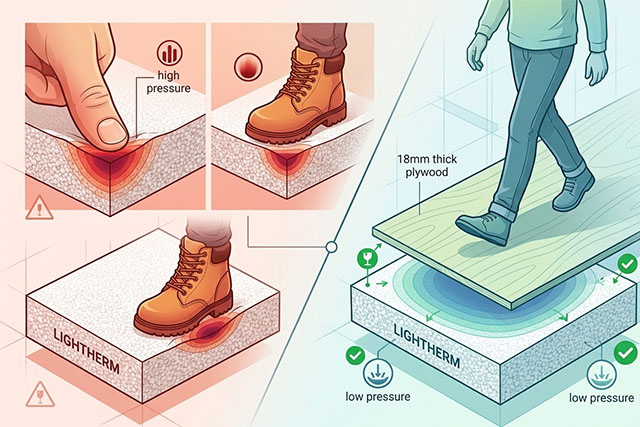
- Next-day access is possible with load distribution boards: At 24 hours, the material has 15–25% of design strength. Direct foot traffic will cause footprints, but walking on 18mm plywood or steel plates reduces contact pressure by 97% — making safe crossing possible.
- “It feels soft” is not a defect — it is a point load misconception: Pressing a thumb into LIGHTHERM applies approximately 1,225 kPa of localised pressure. No lightweight fill is designed for this. The relevant measure is distributed floor load capacity, not concentrated finger pressure.
- Full design strength of ≥0.5 MPa is reached at 28 days: This is the contractual benchmark per BS EN 12390 / SS EN 12390. Strength continues developing beyond 28 days as the slower C₂S hydration reaction carries on, but 28 days is the specified delivery strength.
Introduction
One of the most consistent sources of confusion on sites using LIGHTHERM Drymix is the gap between how the material looks and feels at 1–2 days and what it will actually perform at under design loads. Site teams observe a surface that gives under finger pressure, conclude the material is defective, and raise concerns that delay the programme.
This guide explains the full curing sequence from initial pour through to 28-day design strength — covering the chemistry behind each stage, the access milestones, and the correct way to read early-age surface behaviour.
The First 4 Hours: Hydration Begins
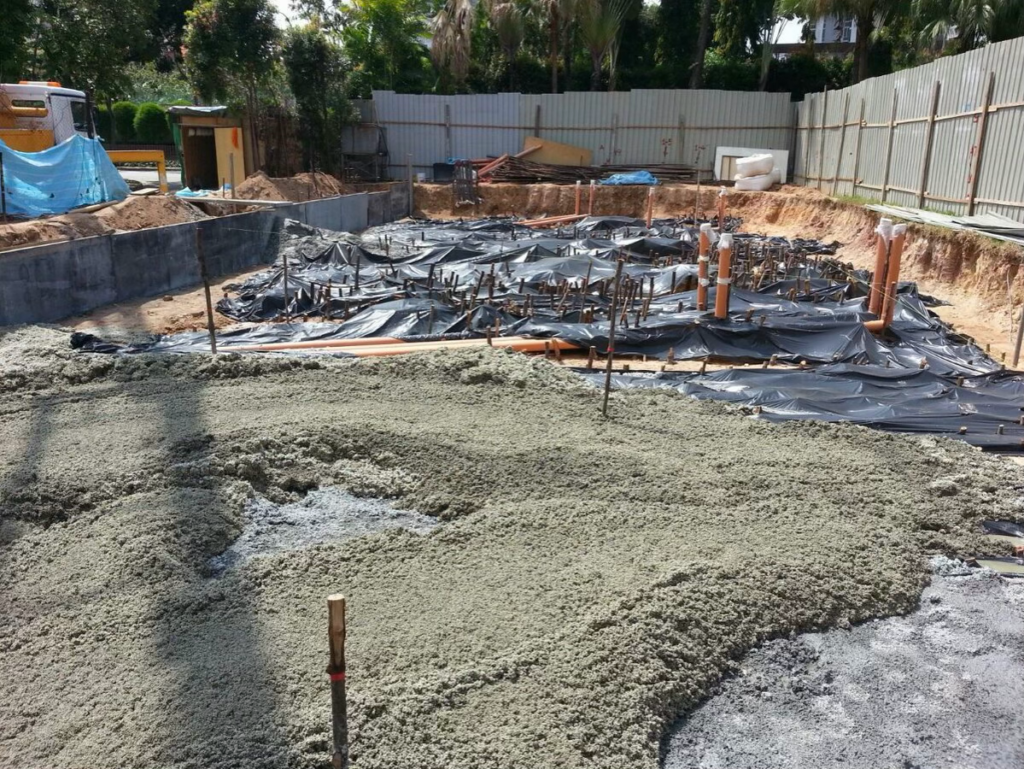
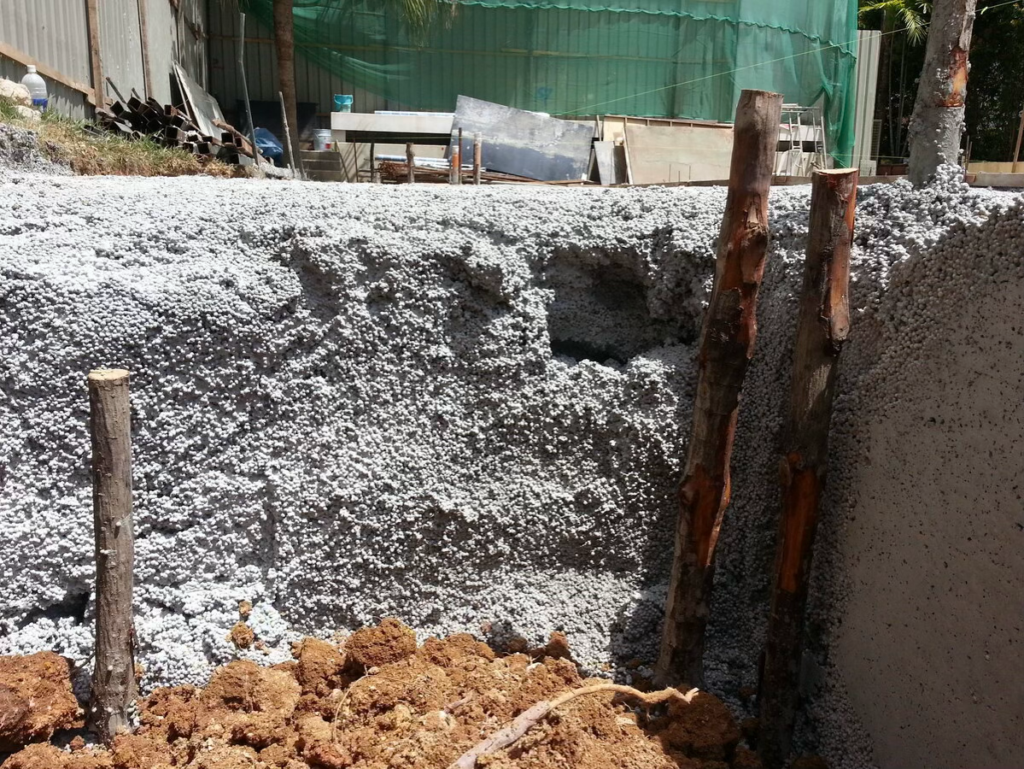
LIGHTHERM Drymix uses Ordinary Portland Cement (OPC) as its binding agent, combined with pre-expanded LIGHTHERM Aggregate (EPS beads) that create the low-density, thermally insulating matrix. The moment water contacts the drymix, the hydration reaction starts — and it proceeds through four distinct stages before initial set is reached.
| Time After Mixing | What Happens | What You See On Site |
| 0–30 minutes | Cement grains dissolve into solution. Calcium and silicate ions release into the mix water. This is the dormant/induction period. | Wet, flowable slurry — easy to pour and screed to level. |
| 30 min – 2 hours | Ettringite crystals (calcium sulfoaluminate hydrate) begin forming around cement grains, creating the first solid bridging structures in the matrix. | Mix starts to thicken. Loses pourable consistency. Surface develops a slight sheen. |
| 2 – 4 hours | Main hydration exotherm kicks in. Tricalcium silicate (C₃S) reacts with water, producing C-S-H gel and portlandite. Crystal networks interlock across EPS bead interfaces. | Material stiffens noticeably. Surface resists finger indentation. Internal temperature rises. |
| 4 hours onward | Initial set achieved. The C-S-H gel network forms a continuous skeleton through the matrix, locking EPS beads in position. Material transitions from plastic to rigid. | Solid to touch. Cannot be re-worked or re-levelled. Surface holds shape under light finger pressure. |
Pot Life vs. Initial Set: Two Different Things
These two terms are frequently confused on site, and the distinction matters for programme planning.
Pot life (~30–45 minutes) is the window during which the mixed LIGHTHERM remains workable enough to pour, spread, and screed to the required level. Once pot life expires, the mix is too stiff to manipulate — but it has not yet set. It is in a transitional state, neither plastic nor rigid.
Initial set (~4 hours) is the point at which cement hydration has progressed far enough to produce a continuous C-S-H crystal network through the matrix. The material transitions from plastic to rigid and can no longer be reworked or re-levelled.
Initial set does not mean full strength. At 4 hours, the material has rigidity but carries only approximately 5–10% of its 28-day design strength. This is far too early for foot traffic or any imposed construction load.
48 Hours: Safe Walk-On Without Protection
Vodapruf recommends a minimum of 48 hours before site personnel walk directly on the LIGHTHERM surface without load distribution boards. Three conditions are met by this point:
- Hydration progress: The C-S-H gel network has substantially developed. The slower-reacting dicalcium silicate (C₂S) has begun contributing to strength alongside the C₃S already in progress.
- Compressive strength: Approximately 30–40% of 28-day design strength has developed. For LIGHTHERM Drymix 250 (design strength ≥0.5 MPa), this equates to approximately 0.15–0.20 MPa at 48 hours.
- Surface hardness: The top surface resists indentation from a boot heel without leaving a permanent mark under normal foot traffic loading.
The reason direct foot traffic causes permanent footprints before 48 hours is straightforward engineering. A 75 kg person standing on one foot concentrates their weight over approximately 0.025 m² (a boot sole area), creating an equivalent contact pressure of around 3.0 kN/m². Before 48 hours, the crystal network has not yet developed enough bearing capacity to resist this concentrated point load without deformation.
Next-Day Access at 24 Hours: Load Distribution Method
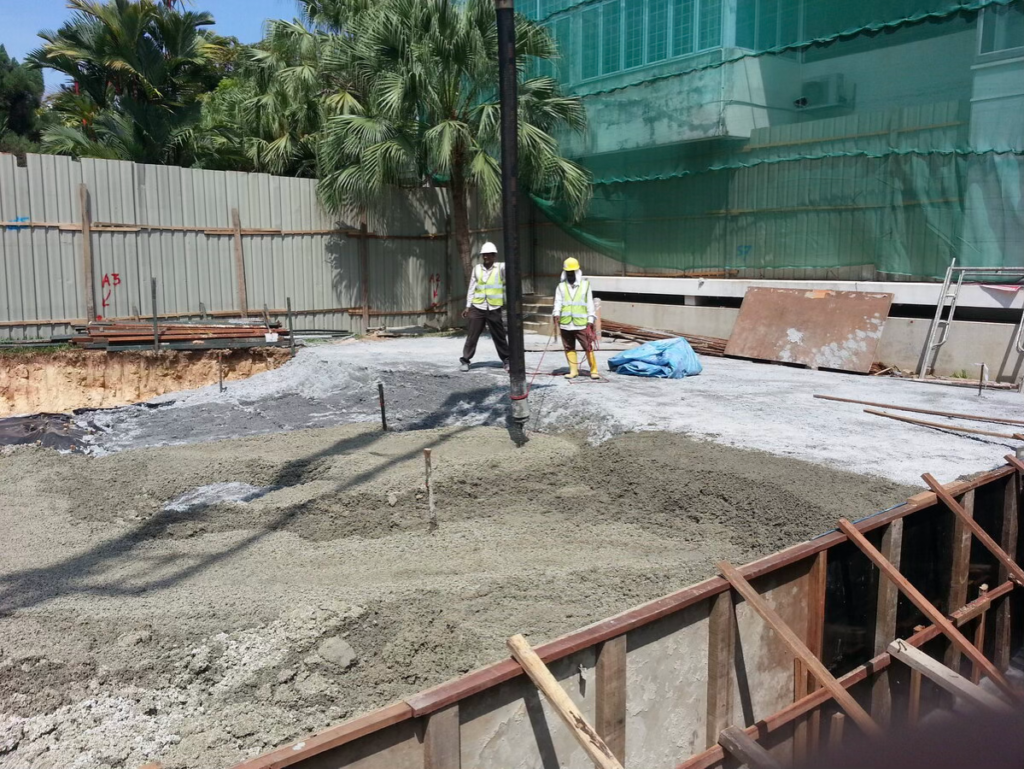
On tight construction programmes, site teams sometimes need to cross the LIGHTHERM surface the following day — to access formwork, reach other work areas, or continue adjacent trades. This is possible at 24 hours, but only with load distribution.
The Engineering Principle
When a person steps directly onto a surface, their body weight is concentrated under the small contact area of their foot sole — a point load. Spreading that same weight over a larger area by walking on a board dramatically reduces the pressure reaching the LIGHTHERM surface. This load spreading principle is well established in structural and geotechnical engineering (Boussinesq stress distribution) and is the basis for temporary works design practice.
| Method | Contact Area | Approx. Pressure (75kg person) | Reduction |
| Direct foot (boot sole) | ~0.025 m² | ~29.4 kPa (3.0 kN/m²) | — |
| Plywood sheet (1200 × 600mm) | 0.72 m² | ~1.0 kPa (0.1 kN/m²) | 97% |
| Steel plate (1200 × 600mm) | 0.72 m² | ~1.0 kPa (0.1 kN/m²) | 97% |
Placing an 18mm plywood board (minimum 1,200 × 600mm) or a steel plate of equivalent dimensions on the LIGHTHERM surface reduces contact pressure from approximately 29.4 kPa to 1.0 kPa — a 97% reduction. At 24 hours, LIGHTHERM has already reached 15–25% of its design strength, which is more than sufficient to resist this very low distributed pressure without surface deformation.
Site advisory: For next-day access, lay plywood sheets (minimum 1,200 × 600 × 18mm) or steel plates as a walking path. Walk only on the boards — never step off onto bare LIGHTHERM. Do not stack materials or place point loads (scaffold jacks, props, wheelbarrow wheels) on LIGHTHERM less than 48 hours old without adequate load spreading.
Curing Timeline: 7-Day and 28-Day Strength Development
LIGHTHERM Drymix gains strength progressively as cement hydration continues over days and weeks. The following table shows the industry-standard development benchmarks against the LIGHTHERM Drymix 250 specification.
| Curing Age | % of 28-Day Strength | LIGHTHERM Drymix 250 (Approx. MPa) | What This Means On Site |
| 4 hours | 5–10% | 0.03–0.05 | Initial set. Rigid but fragile. No traffic permitted. |
| 24 hours | 15–25% | 0.08–0.13 | Firm. Walk-on with plywood or steel plate distribution only. |
| 48 hours | 30–40% | 0.15–0.20 | Walk-on without footmarks. Light foot traffic acceptable. |
| 7 days | 60–70% | 0.30–0.35 | Substantial strength. Light construction activity with care. |
| 14 days | 80–85% | 0.40–0.43 | Nearing design strength. Normal site traffic acceptable. |
| 28 days | 100% | ≥0.50 | Full design strength achieved. All design loads applicable. |
The 28-day benchmark is used worldwide for all Portland cement-based materials per BS EN 12390 and SS EN 12390. It represents the age at which the dominant C₃S hydration reaction is substantially complete. Strength continues developing beyond 28 days as the slower C₂S hydration carries on, but 28 days is the contractual delivery strength.
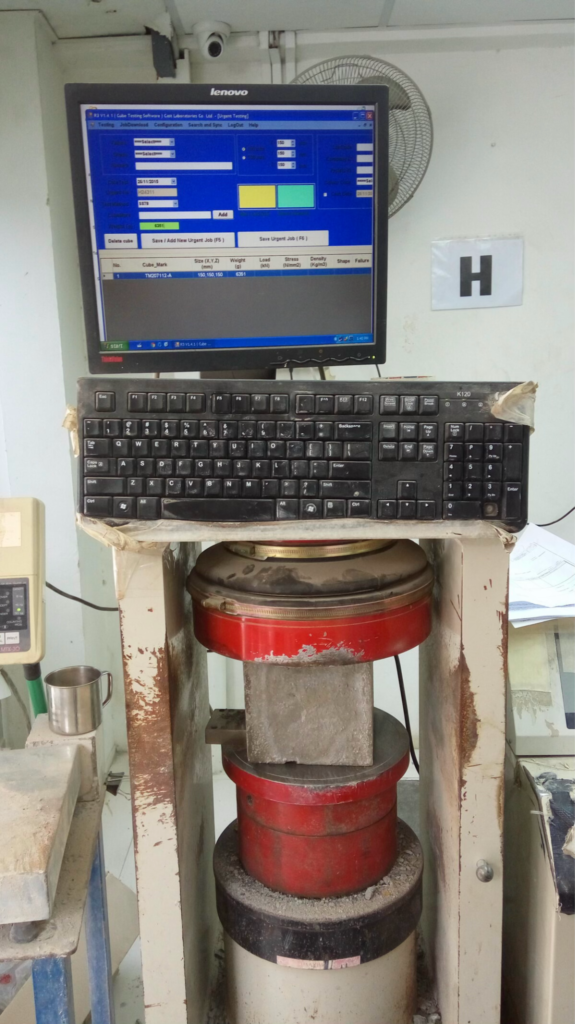
When LIGHTHERM “feels soft” at Day 1 or Day 2, this is completely normal. The material has achieved only 15–40% of its design strength at that stage. Judging the final load capacity of LIGHTHERM at 1–2 days is equivalent to judging a concrete column at 10% of its curing cycle — the full picture is not yet visible.
The “It Feels Soft” Misconception: Point Load vs. Distributed Load
The most common concern raised by clients and site supervisors who are new to LIGHTHERM is this: they press a thumb or step onto the surface, feel it give slightly under concentrated pressure, and conclude the material cannot support floor loads. This reaction is understandable, but it confuses two fundamentally different structural concepts.
Pressing a thumb into LIGHTHERM applies approximately 1,225 kPa of highly localised pressure to a tiny contact area. No lightweight fill material is designed to resist concentrated pressure at that level — and neither is plasterboard, ceiling tiles, or any other lightweight building product. This test says nothing about how the material performs under the evenly distributed loads it is actually designed for.
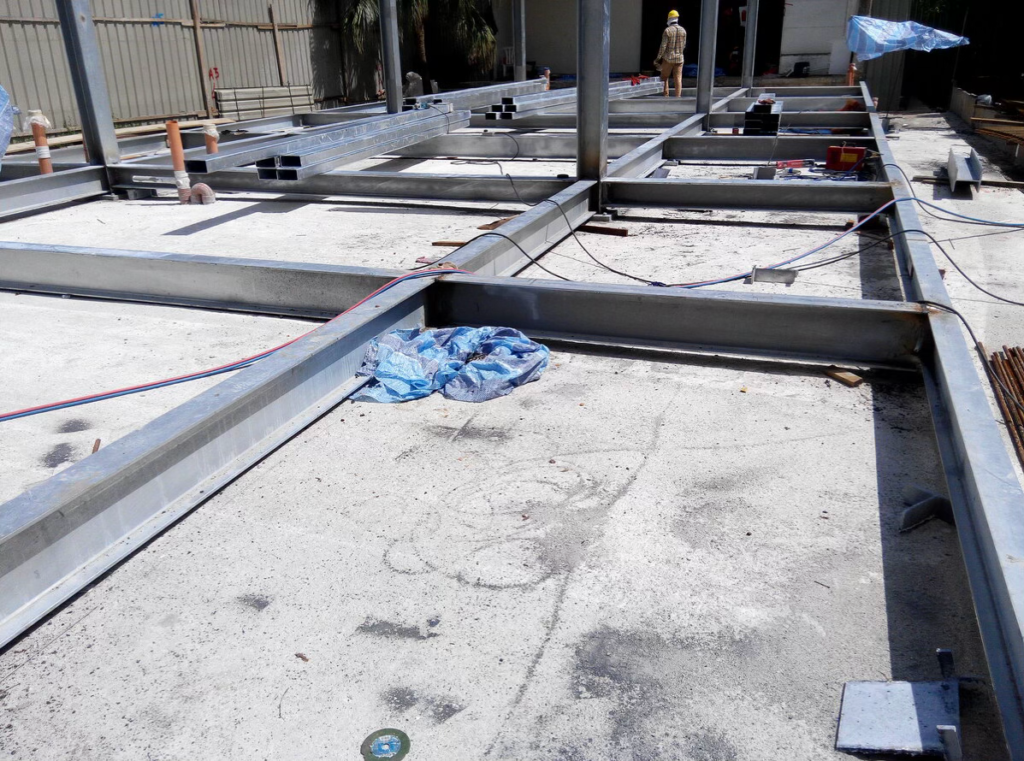
Quick Reference: Curing and Site Access Timeline
Use this table as a programme reference for scheduling trades and site access around LIGHTHERM pours.
| Milestone | Time | Site Action |
| Pot life (workable) | 30–45 min | Pour and screed to level within this window. |
| Initial set | ~4 hours | Material rigid. No reworking possible. No traffic. |
| Earliest walk-on (with protection) | 24 hours | Plywood or steel plate distribution only. No direct foot traffic. |
| Walk-on without footmarks | 48 hours | Direct foot traffic acceptable. No heavy loads or point loads. |
| 7-day strength | 7 days | 60–70% of design strength. Light construction activity with care. |
| 28-day design strength | 28 days | Full stipulated strength (≥0.5 MPa for Drymix 250). All design loads applicable. |
Disclaimer: This guide is for informational purposes and does not constitute professional engineering advice. All structural loading calculations should be verified by a qualified Professional Engineer. Strength development data is indicative and may vary with site conditions, ambient temperature, humidity, and water-to-drymix ratio. Vodapruf Pte Ltd supplies material only — installation is by others unless separately contracted.
Need Clarification? Let’s Talk.
We can walk your site team through the curing timeline and advise on access protocols for your specific project programme. On-site technical guidance available on request.
📞 Malaysia: +60 16 217 7155
📞Singapore: +65 9796 5910
🌐 vodapruf.com
Frequently Asked Questions (FAQ)
How long does LIGHTHERM Drymix take to reach the initial set?
Initial set occurs at approximately 4 hours after mixing. At this point, the C-S-H gel network has formed a continuous skeleton through the matrix, transitioning the material from plastic to rigid. It cannot be reworked or re-levelled beyond this stage.
When can workers walk on LIGHTHERM Drymix without leaving footmarks?
Direct foot traffic without protection is safe at 48 hours. By this point, LIGHTHERM Drymix 250 has reached approximately 30–40% of its 28-day design strength (0.15–0.20 MPa) — sufficient to resist boot-heel indentation without permanent surface deformation.
What is the pot life of LIGHTHERM Drymix, and how is it different from the initial set?
Pot life is approximately 30–45 minutes — the window to pour and screed the material. Initial set occurs at around 4 hours. Between these two points, the mix is too stiff to work but has not yet set — it is in a transitional state, neither plastic nor fully rigid.
Can workers access the LIGHTHERM surface the day after pouring?
Yes, but only with load distribution boards. Placing 18mm plywood sheets (minimum 1,200 × 600mm) or steel plates reduces contact pressure from approximately 29.4 kPa (direct foot) to 1.0 kPa — a 97% reduction — which the 24-hour surface can safely resist without deformation.
Why does LIGHTHERM Drymix feel soft when pressed with a finger or thumb?
Pressing a thumb into LIGHTHERM applies approximately 1,225 kPa of localised pressure — no lightweight fill material is designed to resist this. This does not reflect the product’s distributed load capacity, which is the relevant measure for floor loading applications.
What compressive strength does LIGHTHERM Drymix 250 reach at 7 days and 28 days?
At 7 days, LIGHTHERM Drymix 250 achieves approximately 60–70% of design strength, equating to roughly 0.30–0.35 MPa. Full design strength of ≥0.50 MPa is reached at 28 days, tested per BS EN 12390 / SS EN 12390 — the contractual delivery benchmark.
What should site teams avoid placing on LIGHTHERM before 48 hours?
Avoid all point loads before 48 hours — scaffold jacks, props, wheelbarrow wheels, and stacked materials. If crossing the surface before 48 hours is necessary, use plywood or steel plates for load distribution and walk only on the boards, never directly on the bare LIGHTHERM surface.