
 English
 Arabic
Key Takeaways
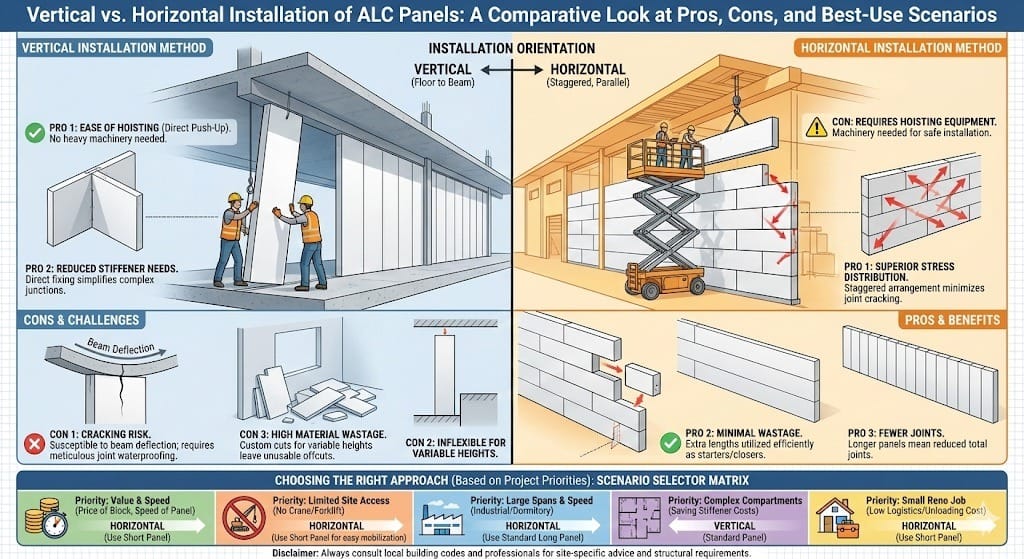
Vertical installation suits uniform buildings:
Floor-to-beam panels are ideal when floor heights are consistent and help reduce the number of stiffeners needed for compartment walls.
Horizontal installation reduces cracking risk:
Staggered horizontal panels spread stress more evenly, which helps prevent joint cracks and improves waterproofing.
Site logistics determine the method:
Use short horizontal panels for sites with limited access; use long panels and lifting equipment where space allows.
Material wastage differs significantly:
Vertical panels often result in more unusable offcuts, while horizontal layouts allow leftover pieces to be reused.Hybrid layouts deliver the best results:
Mixing vertical panels for internal walls and horizontal panels for main walls often gives the best balance of cost, speed, and durability.
Introduction
Autoclaved Lightweight Concrete (ALC) panels are an increasingly popular choice for modern construction, prized for their light weight and the speed they bring to a project. However, achieving optimal performance hinges on the installation method.
There are two primary approaches—Vertical and Horizontal—and each offers distinct advantages and disadvantages. This guide examines the technical trade-offs to help you select the right method based on your specific project priorities.
Vertical Installation Method: When is Floor-to-Beam Best?
There are two primary approaches—Vertical and Horizontal—and each offers distinct advantages and disadvantages. In this method, ALC panels are oriented vertically, running from the floor slab up to the next structural member (slab or beam).
| Pros | Cons |
| 1. Ease of Hoisting (Direct Push-Up): Often allows direct placement without machinery (scissor lift, chain block, forklift or scaffolding) | 1. Vertical joints are more susceptible to cracking, primarily due to beam deflection (the bending of the beam above). This inherent risk necessitates meticulous waterproofing of these joints. |
| 2. Reduced Stiffener Needs: The direct top and bottom fixing, reduce the need for stiffeners, especially in complex compartmental walls. | 2. Inflexible for Variable Heights: Poorly suited for buildings with multiple, varying floor-to-floor heights, complicating panel dimensioning and inventory management. |
| 3. Suitable for Consistent Heights: Ideal for projects where the floor-to-floor dimension is uniform throughout the building. | 3. Increased Wastage: Applying vertical panels often results in higher material wastage. Since custom cuts are frequently needed to accommodate varying or non-standard vertical heights, the leftover cut material from a vertical panel generally cannot be utilized for other vertical applications. |
| 3. Increased Material Wastage | 4. Longer Lead Time: Custom-sized panels spanning entire floor heights often require longer manufacturing lead times. |
Pros and Benefits
- Ease of Hoisting (Direct Push-Up): Often allows direct placement without heavy machinery such as a scissor lift, chain block, forklift, or scaffolding.
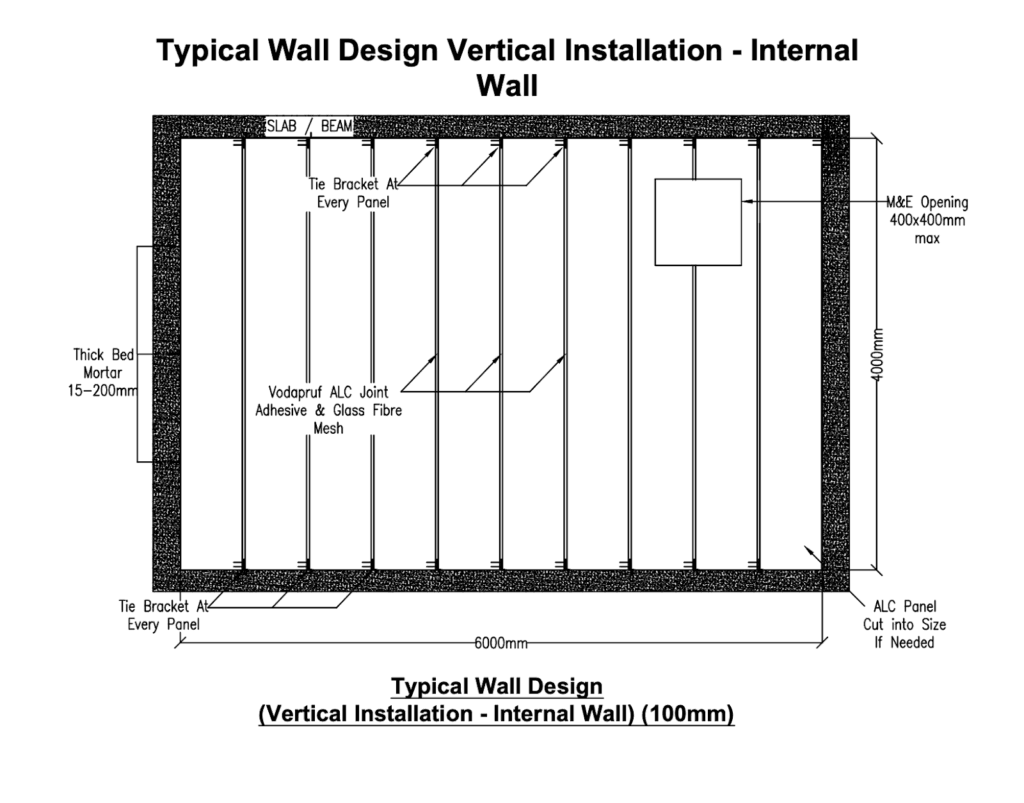
- Reduced Stiffener Needs: The direct top and bottom fixing reduces the need for complex stiffeners, especially in complex compartmental walls.
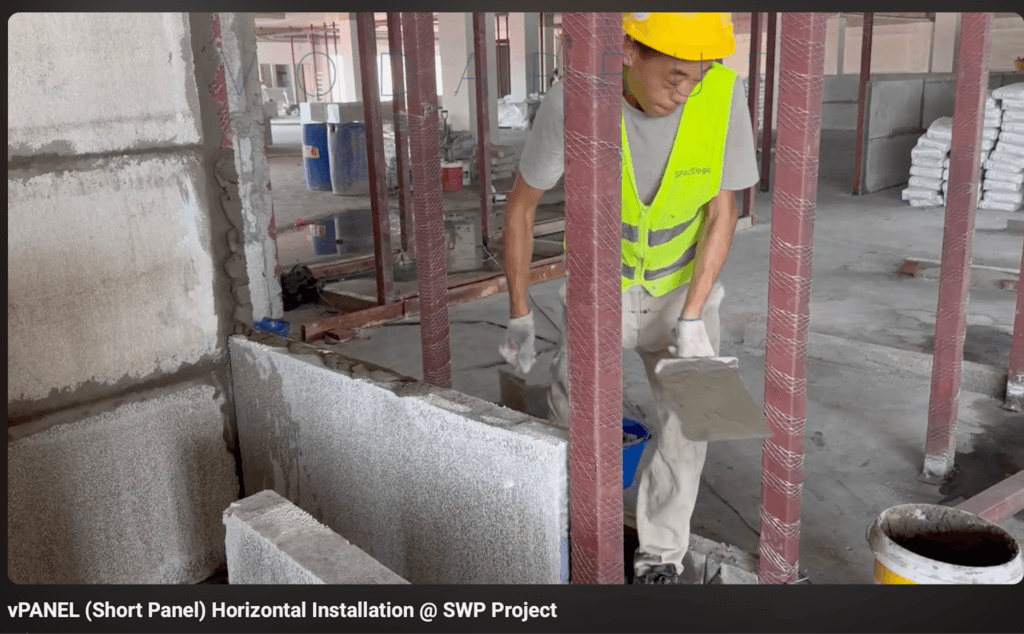
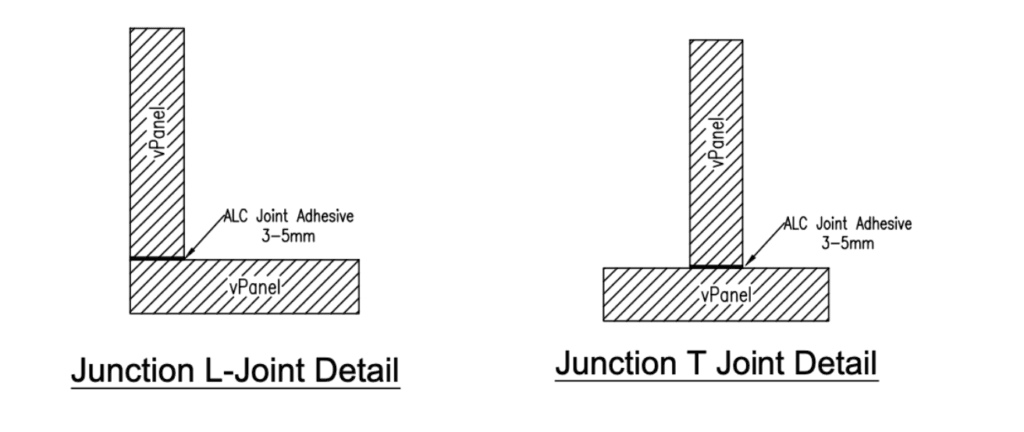
*double check with supplier as each individual project requirement and design is different
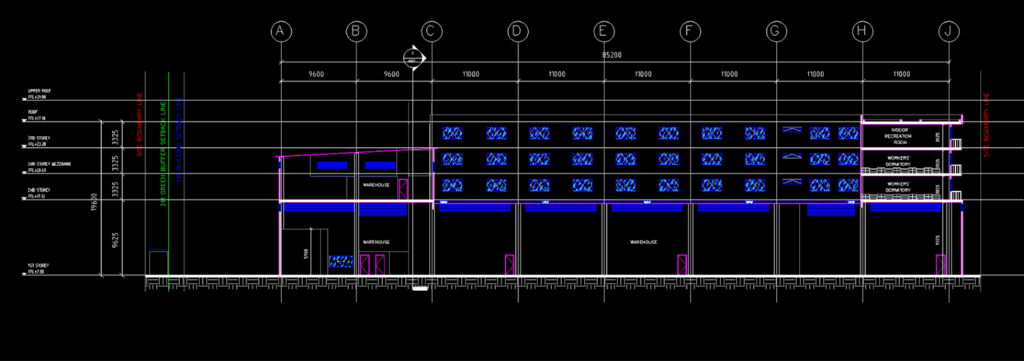
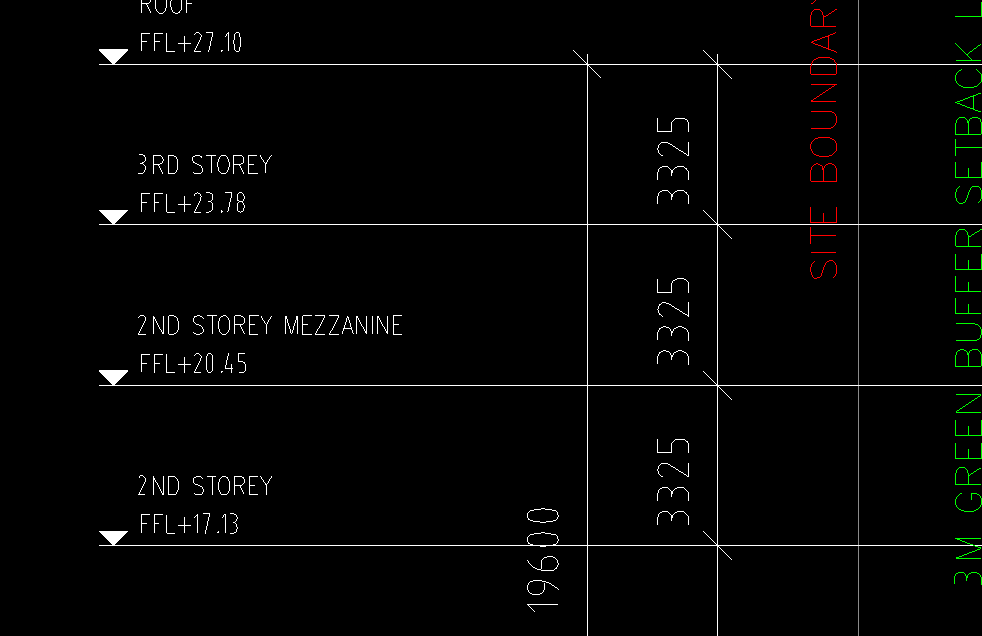
- Suitable for Consistent Heights: Ideal for projects where the floor-to-floor dimension is uniform throughout the building, such as worker dormitories.
Cons and Challenges
- Cracking Risk: Vertical joints are more susceptible to cracking, primarily due to beam deflection (the bending of the beam above). This inherent risk necessitates meticulous waterproofing of these joints.
- Inflexible for Variable Heights: Poorly suited for buildings with multiple, varying floor-to-floor heights, complicating panel dimensioning and inventory management.
- Increased Material Wastage: Custom cuts are frequently needed to accommodate varying or non-standard vertical heights; leftover cut material generally cannot be utilized for other vertical applications.
- Longer Lead Time: Custom-sized panels spanning entire floor heights often require longer manufacturing lead times.
Horizontal Installation Method: Superior Stress Distribution
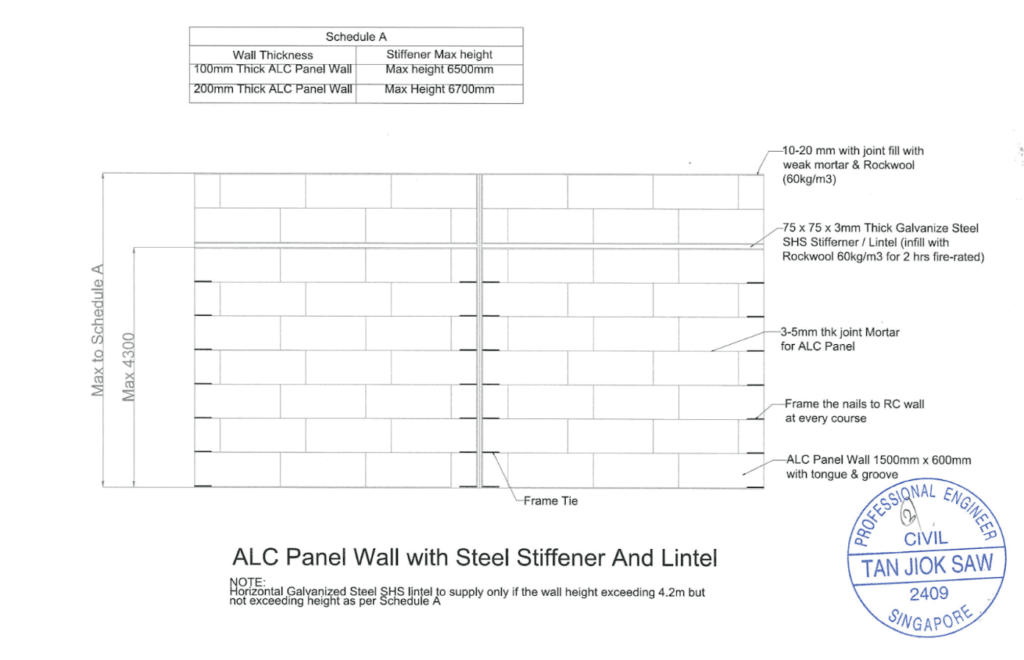
Panels are installed horizontally, typically in a staggered, brick-like arrangement running parallel to the floor slab. This method is often favored for its structural resilience.
| Pros | Cons |
| Superior Stress Distribution (Less Cracking): The staggered arrangement effectively distributes structural stress across the wall, significantly decreasing the likelihood of joint cracking and reducing waterproofing-related problems. | Requires Hoisting Equipment: Placing panels horizontally, especially long ones, necessitates mechanical assistance such as a scissor lift, chain block, or crane for safe and efficient installation. |
| Minimal Wastage: Extra panel lengths can often be utilized efficiently as “starters” or “closers” at the edges of subsequent courses, leading to less overall material wastage. | |
| Better Performance with Reduced Joints: For longer panels (often containing internal rebar), horizontal installation minimizes the total number of joints, further reducing the risk of joint crack formation. |
Pros and Benefits
- Superior Stress Distribution (Less Cracking): The staggered arrangement effectively distributes structural stress across the wall, significantly decreasing the likelihood of joint cracking and reducing waterproofing-related problems.
- Minimal Wastage: Extra panel lengths can often be utilized efficiently as “starters” or “closers” at the edges of subsequent courses, leading to less overall material wastage.
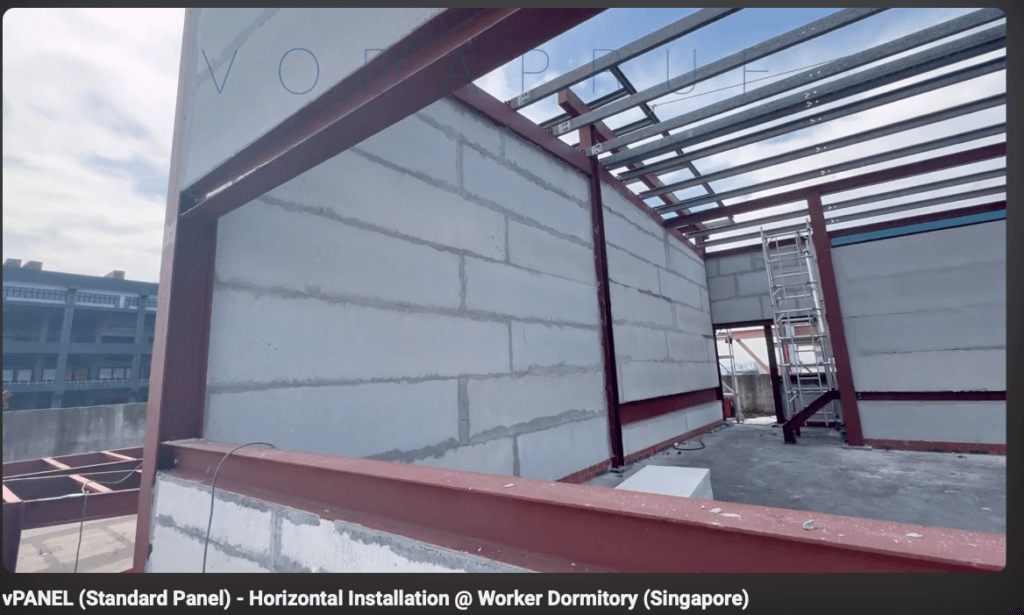
- Better Performance with Reduced Joints: For longer panels (often containing internal rebar), horizontal installation minimizes the total number of joints, further reducing the risk of joint crack formation.
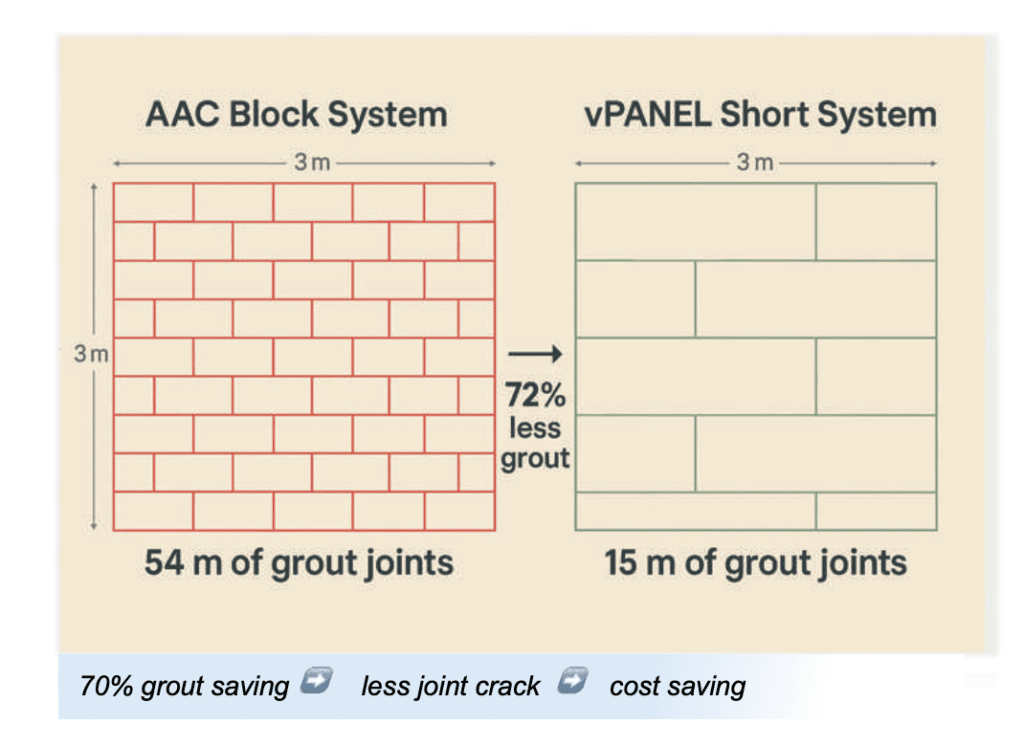
Grout Joint Comparison
| System | Panel Length | Total Grout Joints | Grout Saving |
| AAC Block System | Standard | 54 m | Baseline |
| vPANEL Short System | 3 m | 15 m | 72% Less Grout |
Cons and Challenges
- Requires Hoisting Equipment: Placing panels horizontally, especially long ones, necessitates mechanical assistance such as a scissor lift, chain block, or crane for safe and efficient installation.
Scenario Selector: Choosing the Right Approach
Selecting between vertical and horizontal installation—or combining them—depends on project specifics like site access, budget, and structural needs.
Use the following matrix to align your project priorities with the correct method:
| Project Priority | Recommended Method | Panel Type |
| Value & Speed (AAC price, Precast speed) | Horizontal | Short Panel |
| Limited Site Access (No crane/forklift) | Horizontal | Short Panel |
| Large Spans & High Speed (Industrial) | Horizontal | Standard Panel |
| Complex Compartmental Walls (Save Stiffeners) | Vertical | Standard Panel |
| Small Renovation (Low logistics cost) | Horizontal | Short Panel |
Key Decision Factors:
- Industrial Buildings: For large column-to-column spans of 6m with space for machinery, use Standard Panel with Horizontal Installation.
- Internal Compartments: To save costs on the number of stiffeners, use Standard Panel with Vertical Installation.
- Restricted Mobility: If the site has limited upper-storey access or cargo lift dimension limitations, use Short Panel (1500mm) with Horizontal Installation.
Conclusion
By weighing these pros and cons, contractors and developers can optimize ALC panel use for better budget alignment, faster timelines, and enhanced long-term performance. Whether you prioritize the 70% grout saving of a horizontal layout or the reduced stiffener usage of vertical fixing, the right choice depends on your site’s specific structural requirements.
Always consult local building codes and professionals for site-specific advice.
Frequently Asked Questions (FAQ)
Can I use a mix of both vertical and horizontal installation in the same building?
Yes, many projects utilize a hybrid approach to optimize efficiency. You might use vertical installation for complex internal compartmental walls to save on stiffeners, while using horizontal installation for external walls to benefit from better stress distribution and waterproofing.
How do the waterproofing requirements differ between horizontal and vertical joints?
Vertical joints are highly susceptible to “opening up” due to the natural movement of the building’s frame, requiring high-elasticity sealants and rigorous inspection. Horizontal joints in a staggered pattern distribute this movement more evenly, though they still require standard weatherproofing to prevent moisture ingress.
Which method is faster for a small-scale residential renovation?
Horizontal installation using “Short Panels” (e.g., 1500mm) is usually faster for renovations. These panels are easier to maneuver through existing doors and lifts without heavy machinery, whereas floor-to-height vertical panels are often too cumbersome for restricted residential spaces.
How does beam deflection specifically cause cracking in vertical panel setups?
When the beam above a wall “flexes” or settles due to the weight of the building, it puts direct downward pressure on vertical panels. If there isn’t an adequate expansion gap or if the joints are too rigid, this pressure causes the panels to bow or the grout joints to snap.
Do vertical and horizontal installations require different types of ALC panels?
While the material is the same, the dimensions differ; vertical installation requires “Standard Panels” custom-cut to the exact floor-to-ceiling height. Horizontal installation is more flexible, often utilizing “Short Panels” for manual handling or “Standard Panels” laid sideways for large industrial spans.